New Energy, New Idea, New Life

Views: 0 Author: Site Editor Publish Time: 2026-09-09 Origin: Site


Tired of slow public EV chargers? Relying on standard 120-volt household outlets wastes your valuable time. It yields a mere trickle of energy after hours of waiting. A dedicated home setup solves this daily friction. You wake up with a fully replenished battery every morning. In this guide, we dive deep into the essential elements of planning your setup. We cover power needs, physical placement, and intelligent software configuration from an on-site engineering perspective.
Recent industry analysis shows a massive shift in residential energy management. Homeowners are no longer just buying basic power outlets. The market is rapidly moving toward smart, grid-interactive charging ecosystems. Modern units now communicate directly with local utilities to optimize charging times based on grid demand and variable electricity rates. This transition turns a simple car charger into a critical node for home energy efficiency.
Transitioning to an electric vehicle requires a robust foundation for daily energy replenishment. At the center of this ecosystem is the Level 2 charging station. Basic trickle chargers take days. A 240-volt system delivers a substantial flow of current. This upgrade typically adds 20 to 30 miles of range per hour.
Upgrading your EV infrastructure with a dedicated wall-mounted unit serves as the gold standard for residential and commercial applications. These units bridge the gap between your local power grid and your vehicle battery. They ensure consistent power delivery, advanced safety monitoring, and long-term cost efficiency compared to relying on public fast-charging networks.
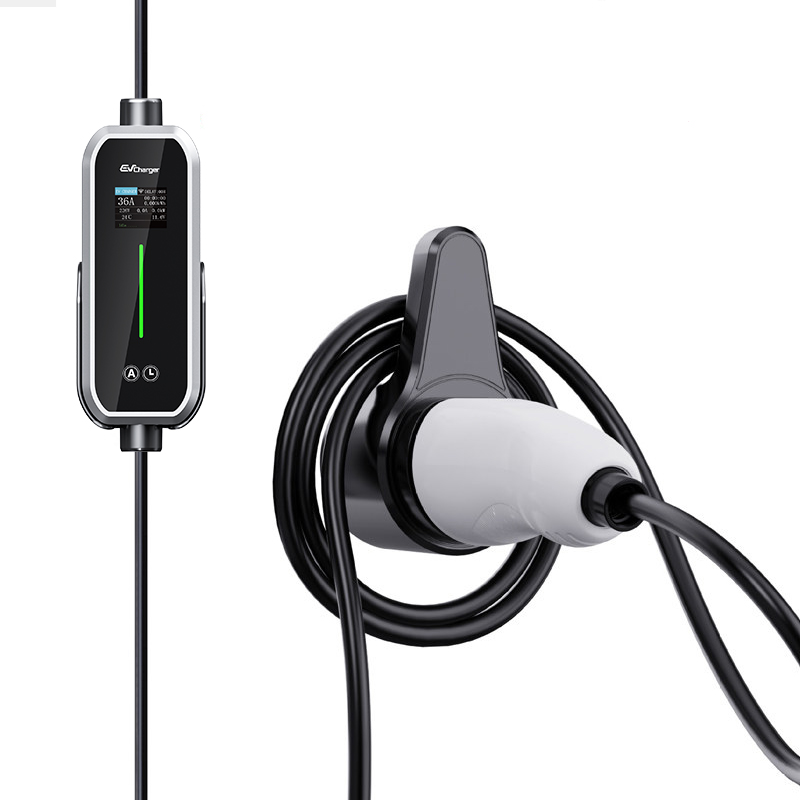
The most critical technical barrier is evaluating your home existing power capacity. A charging station draws a continuous, heavy electrical load for several hours. This sustained demand severely strains older or undersized electrical panels.
Before scheduling any contractor work, a thorough assessment of your main electrical service panel is mandatory. Most modern homes feature a 200-amp service panel. This provides ample capacity to add a 40-amp or 50-amp Level 2 charging circuit. Older homes might only have 100-amp or 150-amp panels.
If your residence utilizes electric heating, a water heater, and an electric oven, a smaller panel lacks the spare capacity for an additional heavy load. A certified electrician must perform a formal load calculation to determine your exact electrical requirements. If the calculation exceeds the panel capacity, a heavy-up upgrade is required to meet safe operational standards.
Electric vehicle chargers operate on a dedicated circuit. No other household appliances can share that specific breaker. The National Electrical Code mandates the 80 percent rule for continuous loads. A 40-amp output requires a 50-amp breaker. Hardwiring is objectively safer for high-amperage output. It eliminates the physical contact points of a plug, which often degrade and generate dangerous heat over time.
Furthermore, hardware manufacturers now embed Dynamic Load Management into their smart systems. DLM monitors the total energy consumption of the house in real time. If household appliances spike in power usage, the charger automatically reduces the current flowing to the vehicle. This prevents tripped breakers and avoids costly panel upgrades.
Physical placement dictates daily convenience and hardware durability. Careful spatial planning ensures the heavy cord reaches your vehicle port without tension.
Mounting the unit inside a garage is straightforward and secure. Indoor environments protect sensitive electronics from severe weather and UV degradation. The main electrical panel is usually nearby. This minimizes the length of thick copper conduit required, significantly reducing material and labor costs.
For properties without a garage, installing an indoor outdoor wallbox is perfectly viable. The hardware must meet strict environmental standards. Premium units feature an IP65 or NEMA 4 rating. This certifies the internal electronics are completely sealed against driving rain and blowing dust.
Temperature extremes play a crucial role. High-quality units operate flawlessly in sub-zero conditions. Still, wrestling with a rigid, freezing cable during a winter blizzard is far from ideal. Mounting the unit under a protective carport keeps the cable pliable. In addition, the location must receive a stable Wi-Fi signal for smart features and firmware updates.
Selecting the appropriate kilowatt output is a delicate balancing act. You must align your vehicle technical limitations with your daily driving routine. Buying the most powerful unit does not automatically guarantee faster replenishment.
A common misconception is that the wall unit dictates the speed. The wallbox actually serves as a sophisticated safety switch passing alternating current to the vehicle. The car internal onboard charger converts this power to direct current. If your vehicle onboard charger is capped at 7.4 kW, connecting it to an 11 kW wall charger still only yields 7.4 kW.
Consulting your vehicle technical specifications is the first step in matching your charging power correctly. Here is a practical selection guide based on real-world engineering standards.
| Power Output | Grid Requirement | Ideal User Profile | Estimated Range Added |
|---|---|---|---|
| 7kW - 7.4kW | Single-Phase 230V / 32A | Daily commuters driving under 50 miles. Plug-in hybrids. | ~25 miles per hour |
| 11kW | Three-Phase 400V / 16A | Heavy commuters, long-range EVs, commercial fleet overnight charging. | ~35 miles per hour |
| 22kW | Three-Phase 400V / 32A | Commercial properties, large battery electric trucks, premium EVs. | ~75 miles per hour |
Standard residential properties typically operate on single-phase power. This supports a maximum output of around 7.4 kW to 9.6 kW. Commercial properties and many European residential grids utilize three-phase power, supporting 11 kW to 22 kW AC charging. High-end AC EV charging stations offer adjustable current settings via an app, giving you ultimate control over your energy draw.
Executing an EV charger installation involves high-voltage electricity and strict regulatory compliance. Treating a high-capacity electrical appliance as a standard weekend DIY project carries life-threatening risks. High-amperage circuits generate significant heat. Improper wire sizing or loose terminal connections easily result in catastrophic thermal runaway.
Before any tools are lifted, a licensed electrician conducts a thorough site assessment. The most labor-intensive phase involves routing heavy-gauge copper wiring from the main service panel to the installation site. Proper wire gauge sizing, such as using 6 AWG copper for a 48-amp continuous load, is critical.
Once the wiring is routed, the mounting bracket is secured to a load-bearing structural stud. The internal wiring is terminated into the charger block. Connections are torqued precisely to manufacturer specifications to prevent arcing. Finally, the electrician restores power, tests the voltage stability with a multimeter, and verifies the internal grounding protections.
Hardware installation is only the physical half of the equation. The true efficiency of modern home energy networks is unlocked through intelligent software configuration.
Upon completion of the physical setup, you pair the device to the manufacturer mobile application via Bluetooth or Wi-Fi. This connection allows for continuous over-the-air firmware updates.
Specifically, electricity costs fluctuate based on grid demand. Many utility companies offer significantly lower rates during overnight off-peak hours. Through the companion app, users define specific charging schedules. Even if you plug the connector into your car at 6:00 PM during peak pricing, the software pauses the current. It automatically initiates the session at midnight when electricity is cheapest.
Smart apps track kilowatt-hours consumed per session. By inputting your local utility rate into the system, the software calculates the precise monetary cost of each charge. This granular data is invaluable for tracking monthly energy budgets.
A home charging station should be viewed as a dynamic node within a broader sustainable home energy ecosystem. For properties equipped with photovoltaic solar arrays, integrating the solar inverter with the charging station represents the ultimate step in sustainable driving. Advanced units offer eco-charging modes that monitor the exact amount of excess solar energy being generated by the roof. The system dynamically redirects this free energy directly into the vehicle battery.
The next frontier is bidirectional charging, commonly referred to as Vehicle-to-Grid. This technology allows the massive battery inside the car to act as a backup power source for the house during grid outages. Establishing a robust, high-amperage dedicated circuit today lays the necessary groundwork for adopting these future energy trading technologies.
Proper planning guarantees a successful and stress-free home charging setup. First, assess your electrical capacity to avoid unexpected panel upgrades. Next, select an ideal location that balances daily convenience with environmental protection. Match the power output to your actual driving habits and grid limitations. Relying on professional installation ensures long-term safety, while configuring smart applications maximizes your energy savings. Upgrading your daily commute with reliable, intelligent electric power starts with choosing the right equipment.
Ready to build a resilient energy foundation for your home or business? Evaluate your specific power needs and explore premium, IP65-rated smart charging solutions at Regital New Energy to find the perfect match for your vehicle and lifestyle.
Costs generally range from $500 to $2,000 or more. This variance depends heavily on the hardware price, local electrician labor rates, and whether your property requires significant electrical panel upgrades or long conduit runs to support the new high-voltage circuit.
It is strongly advised against. Dealing with high-amperage 240V circuits poses severe risks of electrocution and fire. Unpermitted DIY electrical work violates local building codes and will likely void both the product warranty and your homeowner insurance policy in the event of a fault.
Plug-in units typically use a NEMA 14-50 outlet and are easier to replace, but they are generally capped at 40 amps of output. Hardwired units are permanently connected to the electrical panel, allowing for higher continuous output up to 48 amps or more. They also offer superior weather resistance for exterior applications.
Yes. In almost all municipalities, adding a new dedicated 240V circuit and altering your main electrical panel requires a formal building permit. A post-installation inspection by a city official is also required to ensure the work meets national safety standards.
Real estate market trends indicate that homes equipped with dedicated charging stations are increasingly attractive to prospective buyers. Having a permitted, professionally installed charging station is viewed as a premium upgrade that can positively influence overall property value.
Due to the National Electrical Code 80 percent rule for continuous loads, a charger delivering 48 amps requires a 60-amp dedicated breaker. You must also ensure the wiring gauge, typically 6 AWG copper, is rated to handle this specific amperage safely.
While some older EV chargers can plug into a standard NEMA 10-30 or 14-30 dryer outlet, these circuits are usually limited to 30 amps, meaning your charger can only pull a maximum of 24 amps. Furthermore, constantly unplugging and re-plugging heavy-duty appliances can wear out the receptacle contacts, creating a severe fire hazard. A dedicated circuit is always the safest engineering choice.

The adoption of electric vehicles is accelerating in Latin America, with Costa Rica leading the way. The country boasts abundant renewable energy (over 98% clean electricity) and a strong commitment to decarbonization, providing an ideal environment for building electric vehicle charging infrastructure.

Waizida Unlocks New Capabilities with Fully Integrated Circuit Board ManufacturingWaizida has achieved a critical milestone in vertical integration: we now possess complete in-house capability for the research, design, and production of the core printed circuit boards (PCBs) for our EV charging stat

From March 5th to 7th, 2025, the 18th Italy International Renewable Energy Exhibition (KEY Energy 2025) kicked off at Rimini Expo Centre in Italy. As an innovative player in the global new energy charging sector, Waizida showcased its brand-new charging pile series at the exhibition, demonstrating i

Las Vegas, March 22, 2024 — From March 20 to 22, Waizida successfully participated in the 2024 U.S. EV Charging Summit & Expo held in Las Vegas, gaining significant industry attention.As one of the key global platforms for electric vehicle charging technology and infrastructure, the summit attracted


