New Energy, New Idea, New Life

Views: 0 Author: Site Editor Publish Time: 2026-09-24 Origin: Site


You pull into your driveway after a grueling commute. The battery gauge flashes red, and a cold rain begins to pour. At this exact moment, connecting your vehicle to power can either be a seamless, five-second motion or a slightly frustrating chore. As charging infrastructure engineers, we see this daily interaction hinge entirely on the specific hardware mounted to your wall.
When upgrading from a sluggish domestic plug to a dedicated, high-speed wall unit, you face a critical fork in the road. The most significant hardware choice is selecting between a "tethered" design, where the power cord is permanently anchored to the unit, and a "socket" design, which requires you to retrieve and attach your own separate cable.
This comprehensive guide strips away the marketing jargon to objectively evaluate the daily practicalities, aesthetic impacts, and hidden maintenance realities of both designs. Whether you are outfitting a private enclosed garage, an exposed driveway, or a large-scale commercial lot, this analysis will help you secure a future-proof setup tailored to your exact environment.
Tethered units offer maximum daily convenience with a frictionless plug-and-play approach. However, their fixed cables can visually clutter a wall and risk obsolescence if your next vehicle uses a different connector.
Untethered socket units provide a minimalist, clean aesthetic and unmatched adaptability. Because they interface with any electric vehicle, they are the smartest investment for multi-EV households.
For commercial and workplace deployments, socket-based hardware is the undisputed industry standard due to its universal compatibility and drastically lower vulnerability to vandalism.
Your optimal setup ultimately hinges on your physical parking location, your tolerance for handling cables in bad weather, and whether you plan to share the hardware with other drivers.
Before diving into the specific advantages of each configuration, it helps to understand the underlying technology. Regardless of their external casing, both tethered and untethered units function identically at their core. They safely and efficiently channel alternating current from your building's electrical panel to your vehicle's onboard inverter. The internal contactors communicate with your car to monitor temperatures, regulate kilowatt output, and prevent power surges. The fundamental divergence lies purely in the physical mechanism of the connection.
A tethered EV charger features a power cable permanently hardwired into the main body of the device, much like a traditional gas station fuel pump. Typically measuring between 5 and 8 meters, the cable is always ready and waiting. When you park, you simply unloop the handle and plug it directly into your car port. Single-EV households highly favor this design for its immediate, zero-friction experience.
Conversely, a socket unit is a minimalist appliance featuring a built-in outlet—most commonly a universal Type 2 socket—rather than an attached cord. To initiate a session, the driver must supply a detachable, double-ended charging cable. One end locks into the wall unit, and the other connects to the vehicle. This bring-your-own-cable architecture is the prevailing standard for shared residential complexes and aesthetically conscious homeowners.
Looking at recent market data and infrastructure deployment patterns, a clear geographical and behavioral shift is unfolding. Historically, North American consumers defaulted to tethered units for immediate convenience. In contrast, the European market heavily pivoted toward socket-based infrastructure years ago due to denser urban environments and standardized public charging networks.
Today, global trends show a rapidly rising preference for untethered units across all regions. As EV ownership cycles shorten and families begin operating multiple electric cars with varying connector generations, the demand for adaptable hardware is surging. Industry analysts project that modular, socket-based designs will dominate future residential installations, primarily because they prevent premature equipment obsolescence. Homeowners are increasingly viewing charging stations as permanent home fixtures—much like a 240-volt dryer outlet—rather than vehicle-specific accessories.
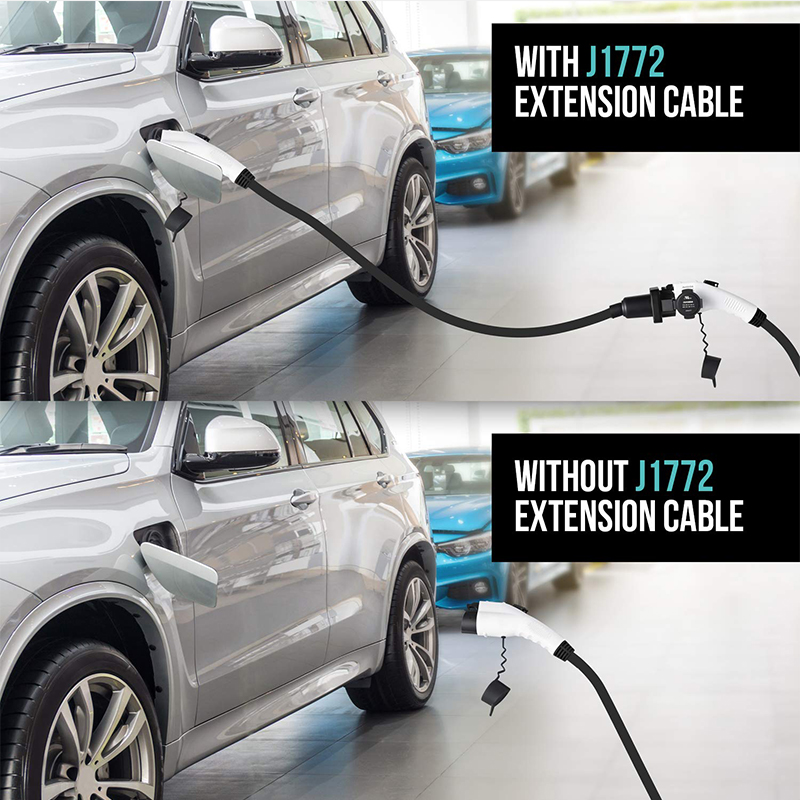
Evaluating this hardwired approach requires a close look at how you physically interact with your vehicle every day. For many drivers, the primary appeal of home charging is the absolute elimination of friction.
The most compelling advantage of a tethered unit is its unparalleled speed of use. You never have to pop your trunk, untangle a stored cord, and manually connect both ends. This convenience becomes incredibly valuable during harsh weather. If you arrive home late at night in a freezing downpour, you simply step out, grab the handle waiting on the wall, and plug it in. It takes mere seconds. For drivers who prioritize minimal physical effort, this seamless routine represents the pinnacle of electric vehicle ownership.
Despite the effortless daily routine, permanently attached cables carry distinct structural disadvantages. The most prominent issue is mechanical wear and tear. If a heavy SUV tire accidentally crushes the connector pin or a family pet chews through the insulation, the repair process is frustratingly complex. You cannot simply swap the part yourself. Replacing a damaged hardwired cord requires an electrician to isolate the breaker, open the weather-sealed enclosure, and re-torque internal terminals, incurring expensive labor costs and extended downtime.
Furthermore, these units suffer from rigid compatibility limits. If you install a tethered model with a specific connector and later purchase a modern vehicle requiring a different standard, your entire wall unit becomes practically obsolete. Finally, managing a thick, 8-meter black cable requires discipline. If not meticulously coiled after every use, it can look untidy and disrupt the architectural curb appeal of your home.
The untethered approach shifts the paradigm from immediate, single-use convenience to long-term, sustainable adaptability. As the market matures, this model is rapidly gaining traction as a robust EV charging solution for both private and commercial properties.
The defining strength of a socket design is its universal interoperability. Because the wall unit merely provides a standardized outlet, it can interface with virtually any electric vehicle on the road. If a guest visits with a legacy vehicle, they simply plug their own compatible cable into your unit. This makes it the only logical choice for households operating two different generations of electric vehicles.
In addition, socket units offer superior visual integration. When the session is complete and you stow the cord in your trunk, the wall unit remains a sleek, unobtrusive technological square on your wall. There are no heavy, looping hazards to clutter your property's exterior.
The primary criticism of this flexible design centers on the wet cable dilemma. On days with heavy precipitation, the cord lying on your driveway will inevitably get soaked and pick up dirt. Once finished, you are forced to coil up this soiled equipment and place it back into the clean trunk of your car, potentially next to your groceries or gym bag. Over time, this introduces unwanted moisture and grime into the cabin.
Additionally, the setup inherently consumes slightly more time. Retrieving the equipment, plugging it into the wall, connecting it to the car, and reversing the entire process the next morning requires conscious effort. While it only adds a minute or two to a commute, this repetitive task can become a minor annoyance for drivers accustomed to instant utility.
To facilitate a clear, objective purchasing decision, the table below synthesizes the operational realities of each configuration across five critical dimensions.
| Evaluation Dimension | Tethered Unit | Socket Unit Untethered |
|---|---|---|
| Daily Convenience | High: Instant plug-and-play. No trunk retrieval required. | Moderate: Requires retrieving, connecting both ends, and storing daily. |
| Visual Aesthetics | Cluttered: Cable is permanently visible; requires neat coiling. | Clean: Sleek, minimalist appearance when unplugged and stored. |
| Vehicle Compatibility | Fixed: Restricted to the factory-attached connector type. | Universal: Works with any EV using the corresponding detachable cord. |
| Maintenance & Repair | Complex: Damage often requires an electrician to open the casing. | Simple: Damaged equipment can be replaced instantly by ordering online. |
| Security & Theft Risk | Vulnerable: Exposed copper wiring can be targeted in open driveways. | Secure: Equipment can be locked inside the vehicle or house when not in use. |
Security is an increasingly relevant factor in suburban and urban environments. Tethered cords, which contain high-quality copper, are occasionally targeted by opportunistic thieves when installed in open, easily accessible driveways. A thief can sever the cord near the casing in seconds. A socket design eliminates this risk entirely. During an active session, modern socket units utilize an electronic auto-lock mechanism that secures the plug into the wall until the vehicle is unlocked by the owner, preventing mid-charge theft.
Residential requirements vary dramatically based on property layout. Aligning the hardware design with your specific architectural setup ensures maximum satisfaction and longevity.
If your primary parking space is a private, enclosed garage, a tethered model is almost always the optimal choice. Inside a garage, the equipment is protected from harsh weather, meaning the cord remains dry and clean year-round. Furthermore, the aesthetic concern of a visible cord is negligible behind closed doors. The sheer convenience of parking and instantly plugging in makes tethered units the reigning champion of indoor residential charging.
Conversely, for vehicles parked on front-facing open driveways, socket models are highly recommended. Open driveways expose equipment to the elements and public view. A socket unit preserves the curb appeal of the home and removes the risk of neighborhood vandalism while the driveway is empty.
When evaluating infrastructure for commercial, workplace, or business-to-business environments, the decision-making criteria shift drastically from personal convenience to liability, durability, and universal access. In these scenarios, the untethered architecture is universally recognized as superior.
Implementing office parking lot charging requires accommodating a highly unpredictable array of vehicles. A facility manager cannot predict whether an employee, a visiting client, or a delivery driver will arrive in a Tesla, a Porsche, or an older Nissan Leaf. Installing tethered units would inherently alienate a portion of the user base. A socket-based AC charging station ensures that the corporate infrastructure remains completely agnostic. Every driver possesses their own specific cord, allowing them to interface seamlessly with the company's hardware.
In semi-public spaces, charging equipment is subjected to severe physical abuse. Fixed cords in office lots are frequently dropped in puddles, left uncoiled across pedestrian walkways to create severe tripping hazards, and repeatedly driven over by heavy vehicles. This rapid degradation leads to unacceptable maintenance costs.
Specifically, socket models elegantly solve this problem by shifting the responsibility of equipment care directly to the user. Because the driver uses their personal property, they are financially incentivized to handle it with care and store it properly. For the facility manager, this drastically reduces the maintenance burden and ensures the core infrastructure remains operational and visually professional.
To finalize your purchasing decision, consider this straightforward criteria checklist based on objective use cases. By carefully evaluating your daily routine, parking environment, and future vehicle plans, you can confidently select the architecture that will provide reliable, frustration-free power delivery.
Choose a Tethered Unit If:
You park exclusively in a private, enclosed garage protected from the weather.
You value speed and daily convenience above all else.
You only own one electric vehicle and have no immediate plans to switch to a different connector standard.
Aesthetic clutter on the installation wall is not a primary concern.
Choose a Socket wallbox If:
Your designated parking space is on a public-facing, open driveway.
You share the hardware with multiple drivers or different vehicle models.
You are installing units for workplace, commercial, or public infrastructure.
You want a minimalist, clean aesthetic for the exterior of your property.
You prefer the security of removing the cord to prevent copper theft.
Generally, no. Most units are strictly hardwired one way or the other by the manufacturer to maintain their specific Ingress Protection ratings and electrical safety certifications. Attempting to modify a hardwired unit into a socket unit voids the warranty and compromises the safety of the device. You must choose the correct hardware design from the very start.
Usually, no. The wall hardware is sold completely separately from the detachable cord. When utilizing a socket unit, you will either use the portable cord that was included in the trunk of your vehicle by the manufacturer, or you will need to purchase a separate, dedicated Type 2 cord from an automotive retailer.
No. The physical charging speed is determined entirely by the kilowatt rating of the wall unit itself—such as 7 kilowatt, 11 kilowatt, or 22 kilowatt—and the maximum acceptance rate of your car's internal onboard converter. Whether the cord is permanently attached to the wall or completely separate has zero impact on the speed of electricity transfer.
Most modern socket units feature a built-in, electronic auto-lock mechanism. Once you plug into the socket and the session is initiated by the vehicle, a small internal solenoid pin drops down, locking the plug firmly in place. The unit will not release it from the wall until you physically unlock your vehicle with your key fob, ensuring your equipment cannot be removed by unauthorized individuals during a charge.

The adoption of electric vehicles is accelerating in Latin America, with Costa Rica leading the way. The country boasts abundant renewable energy (over 98% clean electricity) and a strong commitment to decarbonization, providing an ideal environment for building electric vehicle charging infrastructure.

Waizida Unlocks New Capabilities with Fully Integrated Circuit Board ManufacturingWaizida has achieved a critical milestone in vertical integration: we now possess complete in-house capability for the research, design, and production of the core printed circuit boards (PCBs) for our EV charging stat

From March 5th to 7th, 2025, the 18th Italy International Renewable Energy Exhibition (KEY Energy 2025) kicked off at Rimini Expo Centre in Italy. As an innovative player in the global new energy charging sector, Waizida showcased its brand-new charging pile series at the exhibition, demonstrating i

Las Vegas, March 22, 2024 — From March 20 to 22, Waizida successfully participated in the 2024 U.S. EV Charging Summit & Expo held in Las Vegas, gaining significant industry attention.As one of the key global platforms for electric vehicle charging technology and infrastructure, the summit attracted


