New Energy, New Idea, New Life

Views: 0 Author: Site Editor Publish Time: 2026-07-03 Origin: Site


The electric vehicle infrastructure strategy is rapidly shifting across the industry. Facility managers no longer focus solely on mitigating range anxiety using rapid DC chargers. Instead, they want to optimize natural daily vehicle dwell times. For fleets, workplaces, and multi-tenant properties, a standard AC Charging Station provides the most scalable solution. Heavy, high-voltage equipment drains budgets and heavily strains local electrical grids. Standard low-voltage units offer a highly reliable, grid-friendly way to replenish daily energy. Moving past basic hardware specifications requires evaluating long-term implementation risks. We will explore core selection criteria and strategic financial models. You will learn how to align long-term operational goals seamlessly. By prioritizing open standards and load management, you can build a resilient charging network. This comprehensive approach ensures future adaptability and protects your initial infrastructure investments.
Strategic Fit: AC charging stations (Level 2) balance deployment cost with daily charging requirements, avoiding the high infrastructure premiums of DC fast charging.
Risk Mitigation: Open-standard compliance (OCPP) and dynamic load management are non-negotiable for preventing vendor lock-in and avoiding costly electrical grid upgrades.
Cost Focus: Hardware cost is only one variable; successful deployment requires evaluating software fees, durability ratings, and ongoing maintenance SLAs.
Battery Economics: Consistent, managed AC charging reduces thermal stress on EV batteries compared to frequent DC fast charging, preserving long-term asset value.
Organizations often over-spec their charging hardware. They assume faster speeds always yield better outcomes. This mindset frequently leads to bloated infrastructure budgets. It also causes severe deployment delays due to local grid limitations. High-voltage DC chargers demand massive transformer upgrades. Local utilities often take months to approve these heavy loads. These electrical upgrades strain local grid capacities significantly.
Conversely, low-voltage networks handle standard charging units easily. You can deploy several ports for the capital expenditure of one rapid charger. This favorable deployment ratio allows facility operators to serve more vehicles simultaneously. Volume often matters more than absolute speed in commercial parking environments.
Electrical infrastructure limits dictate deployment success. Facilities usually possess limited spare amperage on their existing electrical panels. Installing an AC Charging Station utilizes this spare capacity efficiently. High-voltage direct current systems require dedicated substations. The capital expenditure reality favors broader, slower networks. Covering an entire parking lot using standard chargers ensures equitable access. You avoid creating artificial bottlenecks where drivers fight over a single fast charger.
| Factor | Standard AC Charger | DC Fast Charger |
|---|---|---|
| Grid Requirement | Low-voltage (Single/Three-phase) | High-voltage (Transformer upgrades) |
| Deployment Ratio | High (Multiple ports per site) | Low (Often limited to 1-2 ports) |
| CapEx Impact | Minimal to moderate | Extremely high |
| Primary Use Case | Dwell times exceeding 4 hours | Quick top-ups (under 45 minutes) |
Industry consensus highlights the impact of charging speeds on battery longevity. Daily reliance on rapid power increases thermal wear inside battery cells. Heavy thermal loads degrade internal lithium components prematurely. Consistent, managed power delivery minimizes this thermal stress. Fleet operators must prioritize battery health to preserve asset value. Utilizing standard daily charging routines extends the functional life of electric vehicles.
Effective infrastructure aligns power delivery speeds directly to natural parking durations. Employees, residents, and fleet vehicles typically remain parked for four to eight hours. Delivering 7kW to 22kW of power matches these extended periods perfectly. Rapid chargers finish the job in thirty minutes. The vehicle then sits idle, occupying a premium charging space. Standard charging speeds optimize the physical real estate and the electrical draw simultaneously.
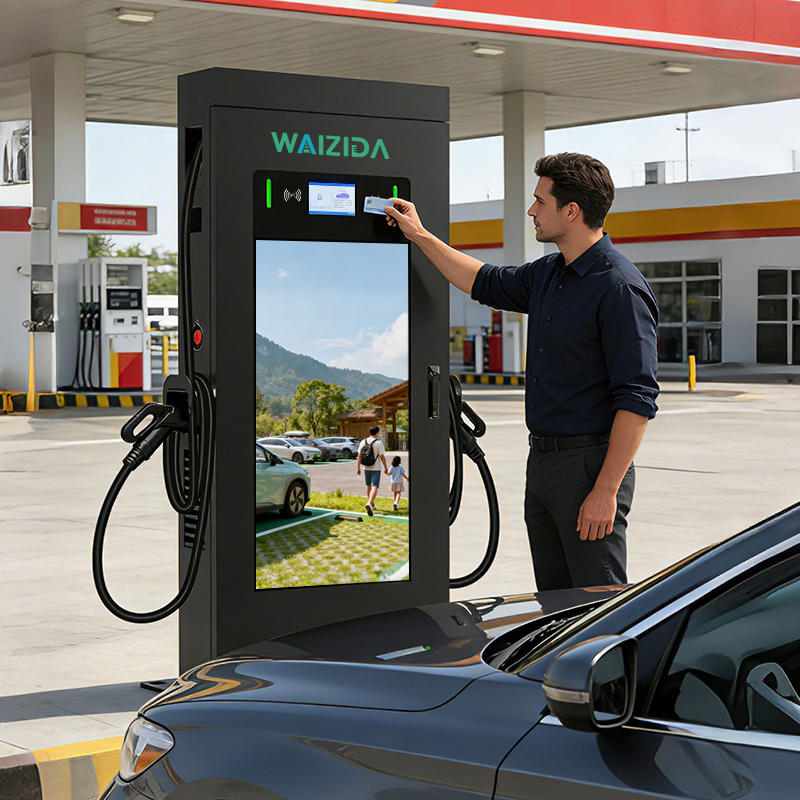
Hardware selection goes far beyond aesthetic design. You must evaluate environmental resilience, intelligent power management, and secure connectivity. A poorly specified AC Charging Station fails quickly under harsh environmental conditions. We outline the crucial specifications below.
Publicly accessible chargers face rain, snow, and potential vandalism. Required certifications include NEMA 3R or NEMA 4 ratings. In European standards, look for IP54 equivalents. These ratings ensure total weather resistance against water ingress and dust. Furthermore, impact resistance remains equally critical. IK08 impact ratings protects the internal electronics from accidental collisions. Devices lacking these certifications suffer frequent downtime.
Select enclosures built from UV-resistant polycarbonate or marine-grade aluminum.
Verify operating temperature ranges match your specific regional climate extremes.
Power availability fluctuates across commercial buildings. Dynamic Load Management (DLM) safely distributes available power across multiple active stations. It prevents simultaneous heavy draws from tripping main building breakers.
For commercial charging stations, DLM is typically managed through the charging management platform. The platform monitors site-level power capacity and dynamically adjusts each charger’s output based on real-time charging demand. This enables centralized load allocation, site-wide power control, and more efficient use of available electrical capacity across multiple chargers.
Many facilities ignore DLM during initial planning. They install basic stations and immediately overload their electrical panels. Retrospective DLM integration costs significantly more than native implementation. Always purchase hardware supporting internal load sharing.
Secure access control dictates who uses your power. Commercial networks require robust user authentication. Common secure options include RFID cards and integrated mobile applications. Forward-looking facilities also demand ISO 15118 readiness. This protocol enables "Plug and Charge" functionality. Vehicles authenticate automatically upon plugging in, removing the need for physical cards. Furthermore, systems processing payments must maintain strict PCI DSS compliance. Data privacy protocols must protect driver payment information entirely.
Smart charging requires stable internet connectivity. An offline station cannot process billing or authorize new users. Assess the available failover protocols strictly. Your hardware should support 4G/LTE as a primary link. It should also offer Wi-Fi or hardwired Ethernet options. Evaluate offline caching capabilities carefully. If the network drops, the charger must store transaction data locally. Once connectivity returns, it uploads the stored data seamlessly.
Procuring the hardware represents only the first step. Hidden deployment risks often derail installation timelines and inflate budgets. You must map out site assessments, civil works, and regulatory hurdles early.
Underestimating existing panel capacity creates massive project delays. You cannot merely attach new breakers to old panels. A baseline electrical load study acts as a mandatory first step. Electrical engineers monitor your building's power draw over thirty days. They identify peak usage periods and calculate remaining capacity safely. Bypassing this study risks catastrophic breaker failures during peak operating hours.
| Phase | Action Required | Expected Outcome |
|---|---|---|
| Data Logging | Attach meters to main panels for 15-30 days. | Accurate historical peak demand data. |
| Capacity Calculation | Subtract peak demand from total panel rating. | Usable amperage limit for EV chargers. |
| DLM Strategy | Apply load management rules to available amps. | Maximum number of simultaneous active ports. |
Civil engineering introduces substantial hidden costs. Trenching through existing concrete parking lots requires specialized labor. Conduit laying and asphalt restoration often exceed the hardware cost of the AC Charging Station itself. Facility managers must establish transparent cost assumptions. Grouping chargers on a shared concrete island reduces trenching distances. Placing chargers closer to the main electrical room significantly limits conduit lengths.
Local compliance goes beyond electrical safety. The Americans with Disabilities Act (ADA) dictates strict accessibility rules. Local equivalents exist globally. Screen heights must remain within accessible reach ranges. Cable management systems must prevent tripping hazards across walkways. Retracting cables keep cords suspended off the ground safely. Permitting timelines vary wildly between municipalities. You must engage local utility providers early to secure interconnect approvals.
Understanding the financial framework guarantees a sustainable deployment. Hardware expenses merely start the conversation. You must calculate recurring expenses and structure effective user billing strategies.
A comprehensive financial model includes four main pillars. First, hardware acquisition covers the physical units. Second, installation encompasses electrical labor, permits, and trenching. Third, recurring network software fees cover the cloud management platform. Fourth, preventative maintenance agreements cover annual inspections and part replacements. Ignoring software and maintenance expenses paints an inaccurate financial picture.
Commercial operators can recoup costs through structured billing. Time-based billing charges users per minute or hour. Energy-based billing charges users per kilowatt-hour (kWh) consumed. Energy-based models offer fairer pricing, as charging speeds taper off near full capacity.
Implementing idle fees proves highly effective. An idle fee penalizes drivers who leave their fully charged vehicles plugged in. This financial lever encourages rapid station turnover. It ensures maximum utilization of your available infrastructure.
Grants and rebates dramatically alter your breakeven timeline. Local utility companies frequently offer substantial rebates for infrastructure upgrades. Federal grants provide significant funding for public-facing networks. However, these incentives carry strict caveats. Rebate programs almost always require specific UL safety certifications. They also mandate open-network compliance. Using proprietary hardware usually disqualifies you from claiming these essential funds.
Selecting the right vendor impacts your operations for the next decade. Treat this decision as a long-term facility integration. Evaluate protocol compliance, warranty terms, and future scalability.
Hardware inevitably experiences wear and tear. Evaluate warranty frameworks thoroughly before purchasing. Differentiate between parts-and-labor warranties versus parts-only agreements. A parts-only warranty leaves you paying exorbitant hourly rates for local electricians. Demand strict Service Level Agreements (SLAs). These agreements must outline guaranteed uptime requirements. They should also guarantee rapid local technician availability when critical components fail.
Your network will naturally grow as EV adoption increases. Can the vendor support a "land and expand" strategy? You might start by installing four ports today. Next year, you may need twenty ports. The vendor must provide a scalable backend infrastructure. Their software should handle adding new units effortlessly. The hardware should chain together smoothly to utilize existing load management structures. Do not partner with vendors lacking clear expansion roadmaps.
Facility Integration over Hardware Purchase: Treat standard AC chargers as permanent facility upgrades rather than isolated tech purchases.
Align Speed with Dwell Time: Match charging outputs to natural parking durations to optimize capital expenditure and preserve vehicle battery life.
Prioritize Open Standards: Mandate OCPP compliance to retain control over your software choices and avoid vendor lock-in.
Plan the Civil Works: Conduct baseline load studies and map out trenching requirements early to prevent budget overruns.
Draft a Comprehensive RFP: Request transparent pricing that includes installation, recurring network fees, and robust maintenance SLAs.
A:The maximum charging speed of an AC charging session is not determined by a single component, but by the constraints of the entire power delivery chain.
In commercial deployments, the actual charging power is limited by the lowest capability among:
The available site electrical capacity (grid or building supply)
The charging station’s rated output (EVSE capacity)
The vehicle’s onboard charger (OBC) rating
As a result, even if a charging station is rated at 22 kW, the delivered power may be lower if either the vehicle or the site electrical capacity imposes a limitation.
A: It depends on the required charging power and the available electrical infrastructure. A single-phase power supply is typically sufficient for lower charging powers such as 7 kW or 11 kW, which are common in residential and light commercial applications. For higher charging power up to 22 kW, a three-phase power supply is required to support the increased load and ensure stable operation.
A: Yes, "dumb" chargers operate offline perfectly. However, "smart" chargers require connectivity to process billing, authenticate users, and manage dynamic load balancing. Many smart chargers offer offline caching to store session data temporarily if the connection drops.
A: A high-quality commercial charger typically lasts between 7 and 10 years. This lifespan depends heavily on environmental exposure, IK/NEMA hardware ratings, and adherence to preventative maintenance schedules.

The adoption of electric vehicles is accelerating in Latin America, with Costa Rica leading the way. The country boasts abundant renewable energy (over 98% clean electricity) and a strong commitment to decarbonization, providing an ideal environment for building electric vehicle charging infrastructure.

Waizida Unlocks New Capabilities with Fully Integrated Circuit Board ManufacturingWaizida has achieved a critical milestone in vertical integration: we now possess complete in-house capability for the research, design, and production of the core printed circuit boards (PCBs) for our EV charging stat

From March 5th to 7th, 2025, the 18th Italy International Renewable Energy Exhibition (KEY Energy 2025) kicked off at Rimini Expo Centre in Italy. As an innovative player in the global new energy charging sector, Waizida showcased its brand-new charging pile series at the exhibition, demonstrating i

Las Vegas, March 22, 2024 — From March 20 to 22, Waizida successfully participated in the 2024 U.S. EV Charging Summit & Expo held in Las Vegas, gaining significant industry attention.As one of the key global platforms for electric vehicle charging technology and infrastructure, the summit attracted


