New Energy, New Idea, New Life

Views: 0 Author: Site Editor Publish Time: 2026-08-18 Origin: Site


Transitioning to an electric vehicle introduces a critical infrastructure challenge for many new owners. You must efficiently manage overnight charging without overloading your local electrical system. Standard household outlets provide basic trickle charging for plug-in vehicles. However, they are often completely insufficient for daily commuting needs. Pushing maximum current through standard sockets for hours also poses long-term wear-and-tear risks. An inadequate home setup frequently results in immense range anxiety and stressful mornings.
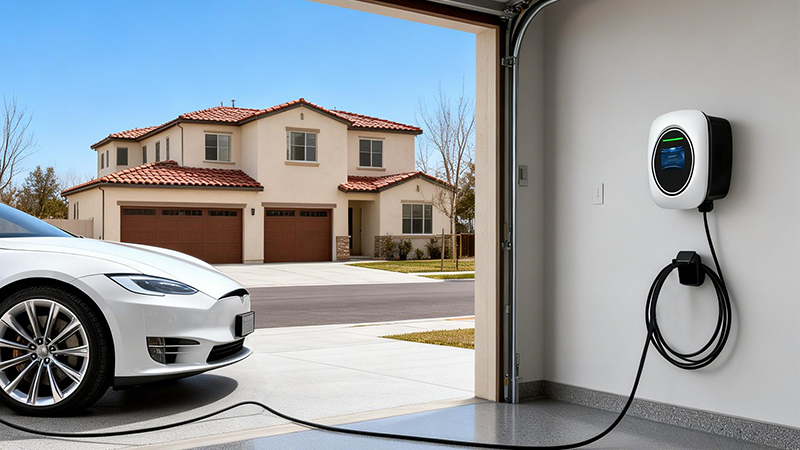
A Wallbox EV Charger elegantly bridges this gap. It serves as a dedicated, high-capacity power delivery system built specifically for heavy loads. These intelligent devices transform your garage into a personalized refueling station. They provide reliability, safety, and unprecedented convenience. This guide breaks down exactly how these systems work to protect your home. We explore the implementation realities you will face. Finally, we provide actionable criteria for selecting the right hardware to future-proof your property.
Accelerated Charging: Upgrading to a wall-mounted Level 2 charger increases charging speeds from 3–5 miles of range per hour to 20–40+ miles per hour.
Terminology Clarification: "Wallbox" operates as both a generic industry term for wall-mounted EVSE (Electric Vehicle Supply Equipment) and a specific manufacturer brand name.
Infrastructure Reality: Hardware is only half the investment; electrical panel capacity, dynamic load management, and certified installation often dictate the final project cost.
Smart Capabilities: Modern wallboxes offer compliance-friendly features like off-peak scheduling and solar-grid integration to lower total cost of ownership.
Many drivers misunderstand how home charging actually functions. A wallbox acts as a dedicated alternating current (AC) charging station. You permanently install it on a garage wall or a freestanding outdoor pedestal. Interestingly, the wallbox itself does not directly charge the car battery. Instead, it functions primarily as a sophisticated safety intermediary. The unit safely delivers higher voltages directly to the vehicle's onboard inverter. The vehicle's internal inverter then converts this AC power into the direct current (DC) needed for the battery. In the US, this requires a 240V connection. In the UK and EU, it uses 230V single-phase power.
To fully understand its immense value, you must look at the stark differences between charging levels.
| Feature Comparison | Level 1 (Standard Household Plug) | Level 2 (Dedicated Wallbox) |
|---|---|---|
| Power Output Range | 1.4kW to 2.3kW | 7.0kW to 22.0kW |
| Target User Profile | Plug-in hybrids, ultra-low mileage drivers | Daily commuters, full battery electric vehicles |
| Average Charging Speed | 3 to 5 miles of range per hour | 20 to 40+ miles of range per hour |
| Time for Full Charge | 30 to 50 hours (for a 60kWh battery) | 4 to 8 hours (for a 60kWh battery) |
Many consumers also get confused by the terminology surrounding these devices. "Wallbox" serves a dual purpose in the current market. It acts as both a generic descriptor and a specific corporate brand name. Companies like Wallbox produce highly rated models like the Pulsar Plus. However, the wider EV industry regularly uses the word to describe any wall-mounted charging station regardless of the manufacturer. We use the term in this broader, generic sense throughout this guide.
You might naturally wonder if your standard garage outlets are enough. Let us assess the daily commute math to find out. Average vehicle battery sizes continue to grow every single year. A typical electric SUV now houses an 80kWh battery pack. If your daily driving exceeds 40 miles, Level 1 charging physically cannot replenish the battery overnight. You will wake up with less and less range each subsequent morning. This creates a dangerous deficit by the end of the workweek. A dedicated Wallbox EV Charger completely eliminates this range anxiety.
Furthermore, cold weather drastically impacts vehicle efficiency. Winter temperatures reduce range and increase the energy required to precondition the cabin. A dedicated station provides enough overhead power to warm the car while still filling the battery rapidly.
Safety and compliance considerations provide an even stronger argument for upgrading. Standard residential wall outlets simply cannot handle continuous, maximum-amperage draws. Pushing heavy loads for 12 or more hours generates intense heat. Older home wiring often degrades under this immense stress. Dedicated charging stations solve this through robust, purpose-built engineering. They feature built-in Residual Current Devices (RCDs) to detect fatal ground faults instantly. They also utilize continuous thermal monitoring within the plug head. These critical safety layers prevent catastrophic electrical fires.
Best Practice: Always prioritize electrical safety over immediate convenience. Upgrading your home infrastructure protects your family, your property, and your expensive vehicle.
Finally, consider property value and long-term future-proofing. Real estate experts increasingly view dedicated EV infrastructure as a standard modern amenity. It rivals the basic necessity of high-speed internet wiring or central air conditioning. Installing a reliable charging station modernizes your property. It makes your home immediately attractive to a rapidly growing demographic of EV-owning buyers.
Selecting the perfect hardware requires evaluating several distinct operational features. You must meticulously match the station's capabilities to your daily lifestyle.
First, you must choose between tethered and untethered hardware designs.
Tethered Models: These units feature a permanently attached charging cable. They offer immense daily convenience because you never have to unpack a cable from your trunk. However, they restrict you to one specific connector type, such as J1772, NACS, or Type 2.
Untethered Models: These feature a universal socket only. They require you to supply a separate charging cable. They look much less visually cluttered on your wall. They also beautifully future-proof your home setup if connector standards inevitably change in the coming years.
Next, look for dynamic load management, which is sometimes called active power management. This feature remains absolutely essential for older properties possessing limited electrical service. The system uses sensors to continuously monitor total household energy consumption. It automatically throttles vehicle charging speeds when other high-draw appliances suddenly activate. If your HVAC system, water heater, or electric oven kicks on simultaneously, the charger uses less power. This intelligent, real-time balancing prevents tripped main breakers.
You should also carefully evaluate smart features and software capabilities.
Remote Monitoring Apps: Wi-Fi or Bluetooth connectivity lets you track active charging sessions directly from your smartphone. You can view real-time energy usage and receive completion alerts.
Tariff Integration: The software automatically schedules your charging sessions during off-peak energy hours. This utilizes the cheapest available electricity rates.
Solar Matching: Advanced units can intercept and divert excess home solar generation directly into your vehicle. This allows you to drive on purely renewable, free energy.
Finally, assess long-term durability and environmental weather ratings. Outdoor installations require strict protection against rain, snow, and dust. Look for robust NEMA 4 ratings in the US or IP65 ratings in Europe. You must also verify the operational temperature range. Ensure the internal hardware survives your local climate extremes without throttling performance.
Purchasing the charging hardware only starts your electrification journey. Deployment introduces several distinct logistical hurdles that require careful professional planning.
The electrical panel audit represents the most common, and often most surprising, adoption bottleneck. You must evaluate your existing electrical panel capacity immediately. Older residential homes often run on limited 100-amp service. Modern electric vehicles typically require a dedicated 40A to 60A breaker to achieve optimal charging speeds. You might need a complete, expensive panel upgrade to support this massive new continuous load safely. The National Electrical Code (NEC) mandates that continuous loads cannot exceed 80% of the circuit rating.
Common Mistake: Never blindly assume your current electrical panel can handle a new Level 2 charging station. Skipping a professional load calculation often leads to dangerous overloads and sudden power failures.
Navigating municipal permitting and code compliance introduces another frustrating hurdle. Local building codes strictly regulate high-voltage residential installations. Some vehicle owners attempt unpermitted, do-it-yourself installations to save a few dollars. This creates immense financial and legal risks. Illegal, uninspected installations can instantly void your home insurance policy in the event of a fire. They also frequently void the manufacturer warranty on the charging hardware itself.
Therefore, finding highly qualified installers remains critical to your success. You must hire certified electrical contractors. Ensure they possess specific EVSE (Electric Vehicle Supply Equipment) training programs, such as EVITP certification in North America. General residential handymen simply lack the nuanced, specific knowledge required for continuous-load applications.
Finally, factor in cable routing aesthetics and physical trenching requirements. Consider the physical distance from your main electrical breaker box to your intended parking spot. Longer wire runs require very expensive, heavy-gauge copper wiring. If you park in a detached garage or outside, underground trenching becomes strictly necessary. Trenching through concrete or landscaping significantly increases your overall project scope. It demands special waterproof conduit and requires digging below local frost lines.
Successfully deploying home charging infrastructure requires careful, methodical planning and professional execution. The process involves much more than simply buying a device online. You can streamline the entire process by following a highly structured decision path.
Audit your home's main electrical panel capacity before making any hardware purchasing decisions.
Define your daily driving mileage realistically to determine your minimum required charging speed.
Select a smart charging station featuring dynamic load management to protect your home grid.
Hire a certified, EV-trained electrical contractor to ensure complete municipal code compliance.
Your immediate next step involves securing a professional technical assessment. We strongly recommend scheduling an on-site load calculation with a certified electrician. Completing this crucial step before purchasing any equipment prevents costly, incompatible investments. It guarantees a smooth, safe transition to electric driving.
A: No. Do-it-yourself installations pose severe safety, legal, and warranty risks. High-voltage continuous loads require highly specialized electrical knowledge. An improper installation can easily cause electrical fires and instantly void your home insurance policy. You must always hire a certified electrician to ensure strict compliance with local building codes and secure necessary permits.
A: Yes, provided the physical connector types match. In the US, most standard vehicles use the J1772 plug, while Tesla utilizes the NACS standard. Europe primarily utilizes the Type 2 standard for all vehicles. If your specific vehicle uses a different connector than your charging station, you can easily bridge the gap using a certified, safety-rated adapter.
A: Most single-family residential homes use single-phase power, safely delivering up to 9.6kW. This easily handles overnight charging for typical daily drivers. A 3-phase connection provides much faster 11kW to 22kW speeds. However, installers generally reserve expensive 3-phase setups for commercial properties, large apartment complexes, or specialized residential environments in specific European regions.
A: Yes. You will never be stranded due to a temporary internet outage. Most smart chargers automatically default to a standard "plug and charge" mode when they lose network connectivity. The unit continues to safely deliver necessary power to your vehicle. However, advanced remote monitoring features and scheduled charging remain temporarily disabled until the connection returns.

The adoption of electric vehicles is accelerating in Latin America, with Costa Rica leading the way. The country boasts abundant renewable energy (over 98% clean electricity) and a strong commitment to decarbonization, providing an ideal environment for building electric vehicle charging infrastructure.

Waizida Unlocks New Capabilities with Fully Integrated Circuit Board ManufacturingWaizida has achieved a critical milestone in vertical integration: we now possess complete in-house capability for the research, design, and production of the core printed circuit boards (PCBs) for our EV charging stat

From March 5th to 7th, 2025, the 18th Italy International Renewable Energy Exhibition (KEY Energy 2025) kicked off at Rimini Expo Centre in Italy. As an innovative player in the global new energy charging sector, Waizida showcased its brand-new charging pile series at the exhibition, demonstrating i

Las Vegas, March 22, 2024 — From March 20 to 22, Waizida successfully participated in the 2024 U.S. EV Charging Summit & Expo held in Las Vegas, gaining significant industry attention.As one of the key global platforms for electric vehicle charging technology and infrastructure, the summit attracted


