New Energy, New Idea, New Life

Views: 0 Author: Site Editor Publish Time: 2026-08-24 Origin: Site


Bringing home a new electric vehicle feels exhilarating. Yet, many drivers face an immediate dilemma right after parking in their garage. You must choose between the instant convenience of a standard 3-pin wall plug and the upfront investment of a dedicated charging station. Standard sockets technically work. They offer zero installation friction and no immediate setup costs. However, they are built for temporary, low-draw appliances. They are simply not engineered for the continuous, maximum-capacity electrical load required by modern electric vehicles. Prolonged use introduces severe risks. We will provide an evidence-based comparison to help you make the right choice. You will learn how safety, charging speed, and smart features factor into this crucial decision. Ultimately, we will help you evaluate if a dedicated charging unit justifies the initial cost based on your specific daily driving habits.
Safety Overload: Regular domestic sockets are not engineered for 10+ hours of continuous high-amperage draw, creating significant thermal and fire risks over time.
Speed & Efficiency: A dedicated wallbox delivers power 3 to 10 times faster than a standard plug, recovering up to 30 miles of range per hour compared to a socket's 4–6 miles.
Cost Recovery (ROI): Smart wallboxes unlock off-peak energy tariffs and solar integration, often offsetting their installation costs within the first two years of use.
The Mileage Threshold: Drivers commuting less than 15 miles daily in a Plug-in Hybrid (PHEV) might survive on a regular socket, but pure EV owners require a wallbox for practical daily usability.
New electric vehicle owners often question the need for expensive home upgrades. You will frequently see the "good enough" argument on popular EV forums. Many users claim their standard wall outlets work perfectly fine. They argue against spending extra money. This perspective holds undeniable psychological appeal.
Standard sockets eliminate installation friction completely. You do not need to hire a certified electrician. You skip the hassle of grid operator approvals. You simply plug the cable into the wall. This plug-and-play convenience tempts almost every new buyer.
We must concede a balanced truth here. Sometimes, standard trickle charging makes mathematical sense. It remains a viable solution under specific, limited conditions:
Extremely low daily mileage: Drivers covering under 15 miles a day barely deplete their battery.
Weekend-only drivers: Cars sitting idle for days have ample time to recover charge slowly.
Small-battery PHEVs: Plug-in hybrids possess much smaller battery packs. They reach full capacity quickly even on slow connections.
For these narrow use cases, a regular socket functions as an acceptable fallback. However, it rarely scales effectively for long-term, daily electric driving.
We must examine the physics of duty cycles. A standard household socket powers intermittent loads. Think about a kettle or a toaster. These appliances draw maximum power for mere minutes. Electric vehicles behave entirely differently. They pull maximum capacity continuously for 10 to 14 hours. Standard domestic wiring simply cannot handle this relentless stress.
Prolonged EV charging causes severe thermal degradation. Copper wiring and socket contacts heat up during extended sessions. Constant heating and cooling cycles loosen these physical connections. Over time, this resistance increases exponentially. It leads directly to melting plastics. Arcing occurs inside the wall. Eventually, this escalation creates a massive electrical fire risk.
Dedicated home charging stations eliminate these critical vulnerabilities. Contrast the fragility of standard sockets against a Wallbox EV Charger. These units operate on heavily reinforced, dedicated circuits. They include built-in RCD (Residual Current Device) protection. They also feature DC leakage detection. These fail-safes meet stringent global electrical safety codes. If a fault occurs, the system cuts power instantly. It protects your car, your property, and your family.
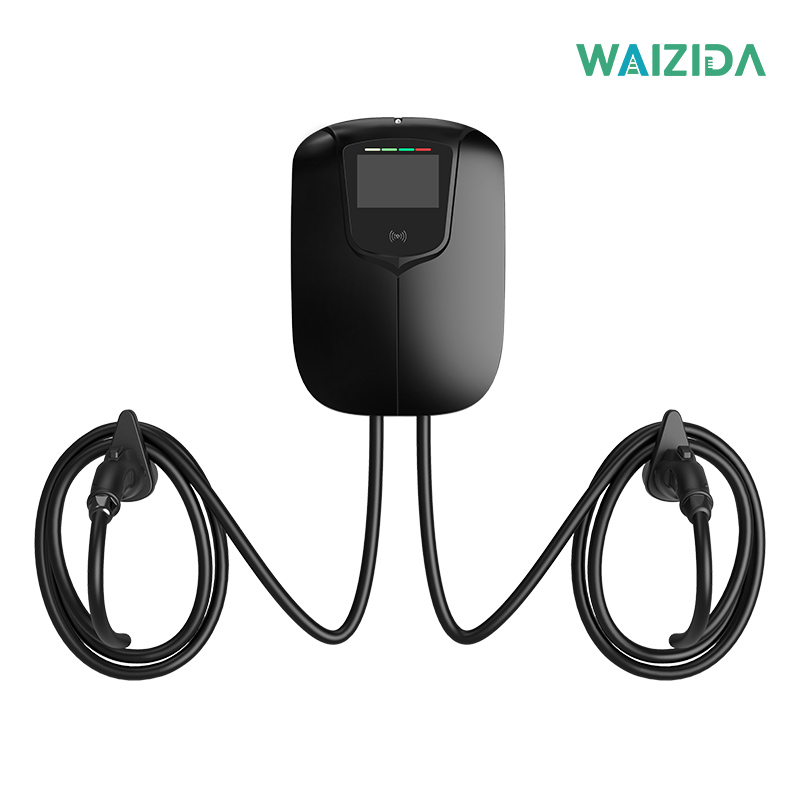
Charging speed determines your daily driving flexibility. Let us compare the outputs directly. A standard wall socket provides roughly 2.3 kW of power. Meanwhile, a standard home charging unit delivers 7.4 kW on a single-phase connection. Some homes support three-phase power. Those installations unlock speeds up to 11 kW or even 22 kW.
These numbers translate into drastic lifestyle differences. We can look at a concrete time-to-full metric.
| Charging Method | Power Output | Time to charge 60 kWh Battery | Miles Recovered Per Hour |
|---|---|---|---|
| Standard 3-Pin Socket | 2.3 kW | ~26 Hours | 4 - 6 miles |
| Single-Phase Wallbox | 7.4 kW | ~8 Hours | 25 - 30 miles |
| Three-Phase Wallbox | 11.0 kW | ~5.5 Hours | 35 - 40 miles |
Beyond speed, you must consider energy efficiency. Standard sockets experience higher electrical resistance. This resistance generates excess heat during long charging sessions. You experience significant thermal energy loss. Your household meter spins, but the energy never reaches the car battery. You literally pay for wasted electricity. Dedicated chargers minimize this loss, ensuring nearly all paid power enters the vehicle.
Smart connectivity transforms home chargers into money-saving tools. Tariff optimization represents the biggest financial advantage. Many energy providers offer cheaper electricity during overnight off-peak hours. Smart units allow you to schedule automatic charging sessions. They start precisely when rates drop. Standard sockets cannot natively do this. They force you to rely on the vehicle's onboard software, which often lacks advanced scheduling reliability.
Solar integration offers another compelling return on investment. Advanced units communicate directly with rooftop solar panels (PV). They route excess solar energy straight into the vehicle. You essentially capture free fuel from the sun. A standard "dumb" socket cannot separate grid energy from solar energy. It simply draws whatever power the house provides.
You must also protect your home's main electrical fuse. Smart units feature dynamic load balancing. They monitor total household energy consumption in real-time. Imagine turning on an electric oven and a heat pump simultaneously. The charger detects this spike. It instantly dials down the power sent to the car. This communication prevents overloaded circuits and tripped breakers.
A hybrid hardware category exists for drivers needing flexibility. We call these units portable smart chargers. A Socket wallbox bridges the gap between hardwired installations and basic trickle cables. They feature smart technology but plug directly into higher-capacity industrial sockets. You commonly see these paired with CEE 16A or 32A outlets.
These portable devices offer distinct advantages and drawbacks:
Pros: You gain ultimate flexibility. You can take the charger on road trips. They provide faster speeds than standard domestic plugs if connected to industrial sockets. They often retain smart features like scheduling.
Cons: You remain bottlenecked by the receptacle's maximum safe output. You still need an electrician to install a safe industrial-grade socket at your primary residence.
We must issue a strong compliance warning regarding these portable solutions. Many users buy aftermarket adapters. They attempt to plug high-draw portable chargers into unverified domestic sockets. This bypasses critical safety limits entirely. Using uncertified adapters causes extreme overheating. It invalidates manufacturer warranties and risks property damage.
Making the right choice depends on analyzing your daily routine. Use this rapid shortlisting checklist to evaluate your true requirements.
Daily Commute Distance: If you drive more than 20 miles daily, you strictly require a dedicated home charger. A standard socket will fail to replenish your range overnight.
Vehicle Type: Pure Battery Electric Vehicles (BEVs) possess massive battery packs. They demand dedicated high-speed units. Plug-in Hybrids (PHEVs) hold smaller batteries. A standard socket might theoretically suffice for them.
Energy Tariffs: Do you want access to EV-specific off-peak electricity rates? Utility companies usually require a certified smart charger installation to grant these tariffs. This makes the hardware financially viable long-term.
Home Infrastructure: You must assess your current electrical panel. Determine if your home has sufficient spare capacity to support a dedicated 32-amp circuit.
Your next-step action is straightforward. Do not purchase any hardware blindly. We strongly recommend booking a home site survey. Have a certified installer assess your home's electrical capacity. They will verify if upgrades are necessary before you commit to a specific unit.
A regular wall socket offers a temporary, low-cost charging fallback. However, it fails spectacularly as a long-term strategy. Relying on a standard plug introduces severe thermal safety risks. It delivers highly inefficient power transfer. It also locks you out of smart grid integration and off-peak savings.
Prioritize safety by avoiding continuous high-amperage loads on domestic wiring.
Unlock significant financial savings through off-peak energy scheduling and solar matching.
Eliminate range anxiety with overnight charging speeds up to ten times faster.
Book a professional site survey to evaluate your electrical panel capacity today.
You should frame a dedicated EV charger as a critical home infrastructure upgrade. It serves as far more than just a car accessory. It actively protects your property. Furthermore, it maximizes the long-term financial benefits of driving an electric vehicle.
A: It is generally legal for emergency or occasional use. However, long-term daily use may violate local electrical safety codes in many regions. Furthermore, continuous overloading can breach the terms of your home insurance policy if a fire occurs.
A: No. You must hire a certified electrician. EV chargers require dedicated circuits and specific fault-protection hardware. DIY installations bypass critical safety regulations. Attempting this yourself will void your hardware warranty and pose a massive fire risk.
A: Slow charging does not damage the battery chemistry itself. However, it reduces overall vehicle efficiency. During a long trickle charge, the car's onboard computer and cooling systems remain awake. This awake-state drains significant energy over 24 hours.
A: No. Hardwiring a high-power charging unit into a standard low-amp domestic circuit is technically impossible and highly dangerous. Domestic circuits utilize thin wiring meant for 13 to 16 amps. High-speed chargers demand dedicated 32-amp cabling straight from your main electrical panel.

The adoption of electric vehicles is accelerating in Latin America, with Costa Rica leading the way. The country boasts abundant renewable energy (over 98% clean electricity) and a strong commitment to decarbonization, providing an ideal environment for building electric vehicle charging infrastructure.

Waizida Unlocks New Capabilities with Fully Integrated Circuit Board ManufacturingWaizida has achieved a critical milestone in vertical integration: we now possess complete in-house capability for the research, design, and production of the core printed circuit boards (PCBs) for our EV charging stat

From March 5th to 7th, 2025, the 18th Italy International Renewable Energy Exhibition (KEY Energy 2025) kicked off at Rimini Expo Centre in Italy. As an innovative player in the global new energy charging sector, Waizida showcased its brand-new charging pile series at the exhibition, demonstrating i

Las Vegas, March 22, 2024 — From March 20 to 22, Waizida successfully participated in the 2024 U.S. EV Charging Summit & Expo held in Las Vegas, gaining significant industry attention.As one of the key global platforms for electric vehicle charging technology and infrastructure, the summit attracted


