New Energy, New Idea, New Life

Views: 0 Author: Site Editor Publish Time: 2026-07-15 Origin: Site


Transitioning electric vehicle charging from a mere compliance checklist item into a premium commercial amenity changes everything. Visitors instantly judge a property by the quality of its facilities. A well-designed charging area signals modern professionalism and deep care for user experience. When drivers encounter broken equipment, their perception of the entire property drops immediately.
Many commercial properties deploy basic, entry-level chargers. These units quickly suffer from severe cable wear, frequent offline statuses, and mounting user frustration. Such predictable failures directly damage brand perception. They also create unnecessary maintenance headaches for property managers and facilities teams.
At the procurement stage, evaluating an AC Charging Station requires looking far beyond basic power output. You must assess the hardware nuances, software interfaces, and environmental integrations carefully. We will explore the critical details ensuring high uptime, low user friction, and true long-term scalability. You will learn how to design a charging experience inspiring driver confidence.
Professionalism in AC charging is defined by user experience (UX), hardware durability, and environmental integration, not just kilowatt delivery.
Active cable management and high-visibility interfaces drastically reduce physical damage and user frustration.
Adherence to open protocols (like OCPP) and standardized payment systems prevents vendor lock-in and operational bottlenecks.
Site context—including lighting, protective bollards, and clear signage—is as critical as the hardware itself for ensuring high utilization and user safety.
The charging cable serves as the primary physical touchpoint for every driver. Cables left lying on the asphalt guarantee rapid degradation. Heavy vehicles run over the connectors daily. Rain, snow, and dirt foul the exposed pins. These realities turn poor cable management into a major vulnerability. Loose cords also create severe trip hazards for pedestrians navigating the parking area.
You must evaluate active cable retraction systems rigorously. Compare simple manual hooks against premium counterweighted or spring-loaded retraction mechanisms. Manual hooks rely entirely on user compliance. Most drivers simply drop the cord after use. Retractors automatically pull the cable upward and away from the ground. They signal a premium, managed environment. More importantly, they extend the hardware lifespan significantly by preventing vehicular crushing.
Enclosure materials require equal scrutiny. A generic "weatherproof" label means very little in harsh outdoor environments. You need verified ingress and impact ratings. Review specific Ingress Protection (IP) and Impact Kinetics (IK) certifications closely.
| Rating Type | Standard Minimum | Professional Grade | Real-World Benefit |
|---|---|---|---|
| Ingress (Water/Dust) | IP54 | IP65 | Complete protection against dust storms and heavy water jets. |
| Impact (Vandalism/Strikes) | IK08 | IK10 | Survives severe blows from shopping carts or heavy tools without housing failure. |
Consider the ergonomic realities of heavy-duty equipment. Thick cables deliver high power reliably. However, they become extremely rigid during winter months. Drivers struggle to maneuver frozen, inflexible cords. You must assess the ergonomic balance between supreme durability and daily flexibility. Selecting a cold-weather rated cable jacket ensures drivers can plug in effortlessly, even in sub-zero temperatures.
Drivers detest convoluted charging sessions. The primary source of electric vehicle driver frustration remains broken or complex payment processes. Forcing users to download a proprietary smartphone app ruins the experience immediately. App-based barriers cause drivers to abandon the station entirely. A professional AC Charging Station must eliminate these unnecessary hurdles.
We strongly recommend deploying universal payment interfaces. Support seamless methods accommodating all visitor types:
RFID card readers for authorized fleet drivers or employee access.
Tap-to-pay credit card terminals for quick, transient visitor sessions.
Simple QR codes linking directly to instant web-checkout pages.
Next, evaluate the physical display clarity under various environmental conditions. Direct sunlight washes out cheap LCD screens entirely. Freezing temperatures cause older screen technologies to ghost or fail. High-contrast OLED or E-ink displays solve these visibility issues perfectly. They render clear, minimal instructions efficiently. Drivers should never struggle to read authorization prompts.
Moving beyond the user interface, backend software flexibility dictates your long-term operational freedom. Relying on closed software ecosystems traps your operation. Ensure full compliance with the latest Open Charge Point Protocol (OCPP) standards. OCPP forms the vital backbone of modern infrastructure. It allows your hardware to communicate seamlessly across different third-party management systems. If your initial network provider degrades their service quality, OCPP lets you switch vendors easily. You retain absolute control over your physical assets.
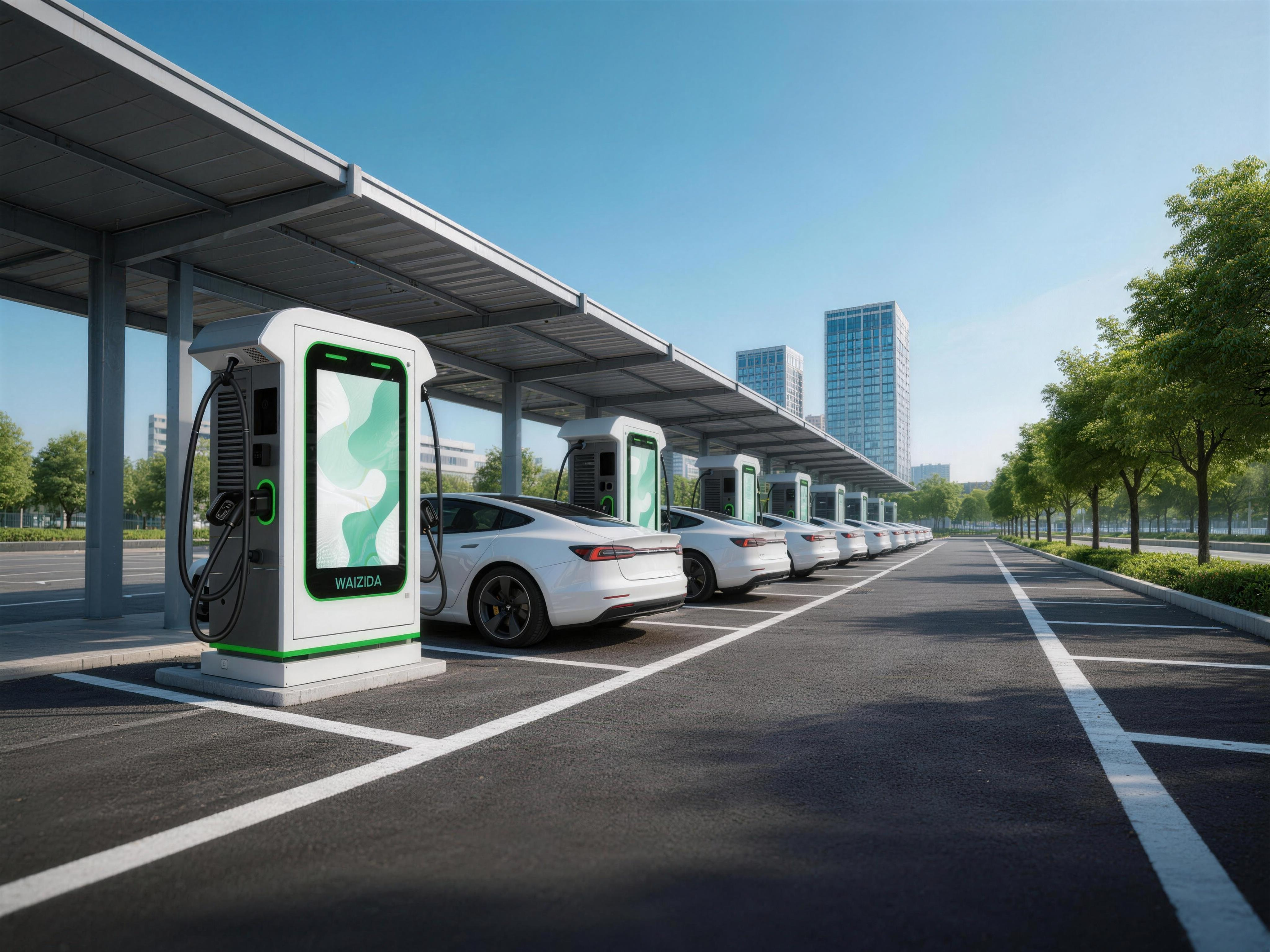
A standalone charger sitting in a dark parking lot corner feels like a complete afterthought. True professionalism extends well beyond the station housing. The immediate footprint defines the perceived safety and usability of the installation. Thoughtful environmental framing transforms a basic utility into a welcoming destination.
High visibility attracts consistent utilization. Integrated LED status indicators should be visible from significant distances. Bright green or blue halos help drivers identify available spots instantly. They eliminate aimless driving around crowded lots. Dedicated overhead lighting creates a secure, welcoming environment. Security camera coverage builds immediate user trust, particularly for drivers charging late at night.
Physical protection represents another non-negotiable factor. Low-speed collisions destroy unprotected units constantly. Integrating heavy-duty wheel stops prevents vehicles from backing directly into the pedestal. Brightly painted, steel-reinforced bollards deflect side impacts effectively. A snowplow or distracted driver striking a bollard saves the expensive hardware from total destruction.
Furthermore, adjacent amenities drastically elevate driver satisfaction. Drivers spend time parked at these locations. Drawing from consistent driver feedback, specific proximity features matter most:
Direct proximity to clean restrooms and indoor waiting areas.
Accessible Wi-Fi coverage reaching the parking stalls reliably.
Weather shelters or protective canopies shielding drivers from heavy rain.
Clear, highly reflective signage guiding traffic flow smoothly.
You must view the charging stall as a holistic micro-environment. Building this supportive ecosystem guarantees higher engagement and positive user reviews.
Behind the physical hardware lies the operational reality of power distribution. Professional setups avoid overloading existing electrical infrastructure. Pulling excessive power triggers localized outages instantly. We mitigate these risks through advanced power distribution technologies.
Dynamic Load Management (DLM) solves complex electrical constraints intelligently. DLM distributes available capacity across multiple active vehicles in real-time. If multiple cars connect simultaneously, the system throttles output dynamically. It prevents the total draw from exceeding your main breaker limits. You avoid conducting massive, disruptive electrical panel upgrades entirely.
| Setup Type | Infrastructure Impact | Operational Result |
|---|---|---|
| Standard Setup (No DLM) | Requires dedicated max-load breakers for every unit. | High risk of overloading panels. Limited scalability. |
| Dynamic Load Management | Shares a single large breaker across multiple units. | Safely maximizes vehicle connections. High scalability. |
Safety standards require deep, uncompromising scrutiny. Never accept uncertified hardware for public or commercial deployment. Verify strict compliance with regional benchmarks, such as UL and CE standards. Review the manufacturer’s internal quality assurance protocols closely. Continuous thermal monitoring remains absolutely non-negotiable. If internal temperatures spike during a summer heatwave, the unit must throttle power automatically. Integrated ground fault protection prevents fatal electric shocks instantly.
Interconnected hardware demands rigorous data security measures. Networked units transmit sensitive user data constantly. You must assess the encryption protocols used for payment processing. Secure internal network communication neutralizes emerging cybersecurity threats efficiently. Vulnerable charging networks provide an easy backdoor into wider facility networks. Strict encryption ensures your property remains digitally secure.
Selecting the right vendor requires moving past basic specification sheets. You must focus heavily on long-term operational outcomes. A framework for comparing top-tier vendors against basic commodity providers highlights stark operational differences. Do not simply look at peak kilowatt delivery. Assess the comprehensive support structure backing the hardware.
Service Level Agreements (SLAs) determine your actual uptime. You need to know the vendor’s guaranteed response time for troubleshooting. Will they dispatch hardware replacement parts swiftly? Do they offer deep remote diagnostic capabilities? Remote resets resolve the majority of software glitches instantly. A vendor lacking strong remote support guarantees extended downtime periods.
Actionable next steps ensure confident procurement decisions. Always request a pilot deployment or a comprehensive site survey first. Testing a single unit exposes potential integration hurdles early. You can evaluate the software backend practically before a full-scale rollout.
Furthermore, ask vendors for specific reference installations. Demand to see similar use cases in the real world. Class A office buildings, high-end retail centers, and multi-family properties provide excellent benchmarks. Speak directly with facility managers about their operational experiences. Ask them about cold weather performance and network reliability. Thorough vetting guarantees you deploy a truly professional charging amenity. Partnering with proven experts eliminates the friction typically associated with EV infrastructure expansion.
Deploying a professional charging environment requires deliberate attention to granular details. Professionalism exists exactly at the intersection of high-grade hardware, frictionless user experience, and robust backend safety. You must look beyond standard power output metrics. Cable retractors, high-visibility displays, and protective bollards define the actual user reality.
Prioritize open communication standards and supreme physical durability over minor aesthetic features. Ensure your equipment integrates seamlessly into the surrounding site context with proper lighting and amenities. Implement intelligent load management to protect your existing infrastructure. By focusing on these critical factors, you guarantee a future-proof deployment. You will deliver a superior charging experience satisfying modern drivers completely.
A: Dynamic Load Management shifts power based on real-time vehicle demand. Instead of flat-lining all connections, it allocates maximum power to vehicles needing it most. When a battery nears full capacity, it naturally draws less power. DLM redirects this surplus to newly arrived vehicles. This intelligent distribution minimizes actual user impact entirely.
A: Integrating Point-of-Sale terminals significantly reduces user friction. Drivers dislike downloading multiple proprietary apps just to authorize a session. Tap-to-pay terminals provide instant access for transient visitors. Balancing the hardware complexity against this massive increase in accessibility usually results in much higher overall utilization rates.
A: Modern retractor units utilize sealed, self-lubricating mechanisms. These moving parts require minimal ongoing maintenance. The effort involves simple visual inspections during routine facility checks. This minimal upkeep vastly outweighs the constant labor required to replace cables crushed by vehicles or damaged by freezing weather.
A: The Open Charge Point Protocol acts as the universal language for EV infrastructure. It allows different hardware brands to communicate with various network management systems seamlessly. Implementing OCPP prevents vendor lock-in. You can change your software provider later without ripping out your physical hardware.

The adoption of electric vehicles is accelerating in Latin America, with Costa Rica leading the way. The country boasts abundant renewable energy (over 98% clean electricity) and a strong commitment to decarbonization, providing an ideal environment for building electric vehicle charging infrastructure.

Waizida Unlocks New Capabilities with Fully Integrated Circuit Board ManufacturingWaizida has achieved a critical milestone in vertical integration: we now possess complete in-house capability for the research, design, and production of the core printed circuit boards (PCBs) for our EV charging stat

From March 5th to 7th, 2025, the 18th Italy International Renewable Energy Exhibition (KEY Energy 2025) kicked off at Rimini Expo Centre in Italy. As an innovative player in the global new energy charging sector, Waizida showcased its brand-new charging pile series at the exhibition, demonstrating i

Las Vegas, March 22, 2024 — From March 20 to 22, Waizida successfully participated in the 2024 U.S. EV Charging Summit & Expo held in Las Vegas, gaining significant industry attention.As one of the key global platforms for electric vehicle charging technology and infrastructure, the summit attracted


