New Energy, New Idea, New Life

Views: 0 Author: Site Editor Publish Time: 2026-09-16 Origin: Site


Commercial electric vehicle infrastructure is rapidly shifting. It has evolved from a simple green amenity into a core revenue driver. Today, offering reliable power is an absolute operational necessity for modern properties. However, many businesses struggle to build profitable, efficient networks. Selecting the wrong hardware tier often results in stranded, useless assets. You might also face deeply frustrated users or massively bloated utility bills. These strategic missteps cost companies significant capital every single year.
This guide deconstructs the essential mechanics and business cases for deploying a commercial DC Charging Station. We will explore procurement realities and vital technical requirements. You will learn how to evaluate hardware accurately. Finally, we provide actionable steps to build reliable vendor partnerships. You can evaluate solutions and move forward confidently.
Technical Advantage: DC fast chargers bypass the vehicle’s onboard converter, delivering direct current straight to the battery for rapid replenishment.
Strategic Alignment: Ultra-fast DC charging stations are mandatory for high-turnover environments (fleets, C-stores, retail) where dwell times are under 45 minutes.
Implementation Reality: Hardware is only part of the equation; successful deployment requires early utility coordination, site feasibility assessments, and understanding peak demand charges.
Vendor Selection: Future-proofing requires evaluating hardware based on modularity, open-source protocol compliance (OCPP), and robust uptime SLAs.
Most drivers understand the basic concept of plugging in a vehicle. However, enterprise buyers need deeper technical knowledge. Standard Level 2 hardware relies entirely on the car to process electricity. A commercial unit completely changes this operational dynamic.
Grid power flows continuously as alternating current (AC). Meanwhile, batteries only store direct current (DC). Standard Level 2 units deliver raw AC directly into the car. The vehicle then uses an onboard charger to convert this power. This onboard converter is heavy, small, and inherently slow. A commercial DC Charging Station houses massive internal inverters. It processes grid AC power into DC before electricity ever touches the vehicle. It bypasses the vehicle’s internal bottleneck completely. This heavy lifting happens entirely inside the charger cabinet.
Fast charging requires immense, sustained energy. Commercial setups demand robust 380V/480V 3-phase power from the local grid. High-capacity sites often split their equipment into two distinct parts. You have large power cabinets and separate dispensing units. Power modules sit safely away from consumer traffic. They take the raw grid load and rectify it efficiently. The sleek dispenser stands in the parking lot. Drivers only interact directly with this dispenser. This split architecture protects heavy electronics from minor vehicle collisions.
You cannot simply force maximum electricity into a battery indiscriminately. It requires absolute precision. The charger and the car talk continuously over a digital network. We call this the BMS handshake. They negotiate voltage limits in real time. The charger monitors cell temperatures actively. If the battery gets too hot, power output drops immediately. This dynamic charge curve ensures safety above all else. It protects delicate battery chemistry while delivering the fastest possible speeds.
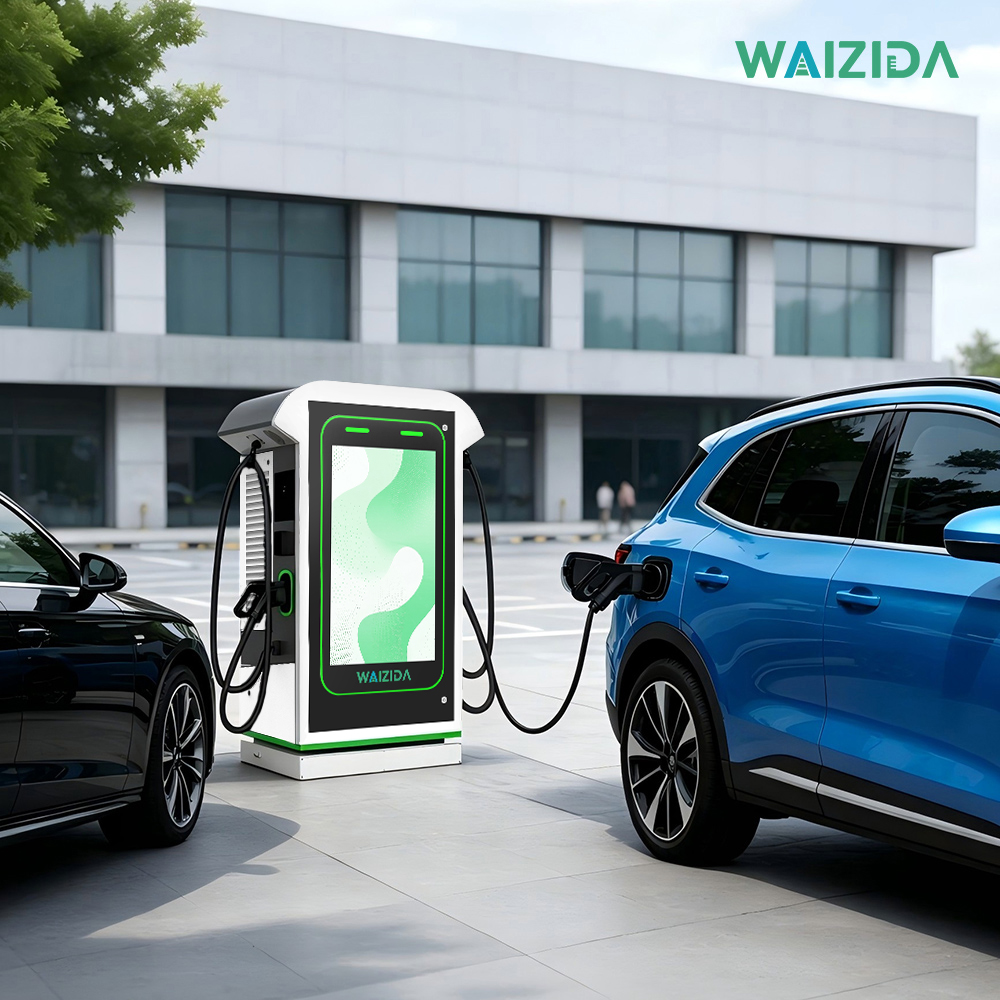
Hardware choices must match consumer behavior perfectly. You must align output speeds to how long people typically stay. We call this the average dwell time. Getting this ratio right dictates your project's profitability.
Understanding dwell time prevents massive overspending. Fast food restaurants need rapid turnover constantly. Drivers stop for roughly 15 to 30 minutes. These highway corridors demand serious power. An Ultra-fast DC charging station delivering 150kW to 350kW is strictly mandatory here. Conversely, grocery stores see much longer visits. Shoppers browse aisles for 45 to 90 minutes. Here, a 50kW to 100kW system works exceptionally well. It provides a perfect operational balance. You avoid excessive hardware costs while fully satisfying driver needs.
Optimal Charger Speeds Based on Customer Dwell Time
| Location Type | Average Dwell Time | Recommended Power |
|---|---|---|
| Quick Service / Highway | 15 - 30 mins | 150kW - 350kW |
| Grocery / Big Box Retail | 45 - 90 mins | 50kW - 100kW |
| Workplaces / Hotels | 4 - 8 hours | Level 2 / 25kW DC |
Fleets face entirely unique challenges. Commercial vehicles generate zero revenue while parked. Delivery vans and transport trucks need maximum daily uptime. Last-mile delivery operations illustrate this perfectly. Their routes run on incredibly tight margins. An Ultra-fast DC charging station solves this scheduling bottleneck. It minimizes vehicle downtime dramatically. Drivers can recharge during short mandated lunch breaks. Companies can run intensive multi-shift operations easily. You achieve this density without expanding the total fleet size.
You can monetize this vital infrastructure directly or indirectly. Direct monetization relies strictly on billing users. You charge visitors per kilowatt-hour or per minute. However, indirect value often yields higher overall profits. Retailers see significantly increased foot traffic. EV drivers are captive audiences during their wait. They tend to buy high-margin snacks inside the store. Property managers also use chargers to attract and retain high-value commercial tenants.
Not all hardware is created equal. You must evaluate options systematically. Follow these four crucial dimensions before authorizing any purchase orders.
Scalability and Modularity: Consumer needs change quickly. Future-proofing saves serious money. Always choose modular hardware configurations. You might install a 150kW cabinet today. Later, you can insert additional internal power modules. You upgrade the unit to 300kW without replacing the expensive outer housing.
Cooling Mechanisms: High power output creates massive internal heat. Compare standard air-cooled systems against advanced thermal options. Liquid-cooled cables are absolutely necessary for continuous 350kW output. They also keep charging cords significantly thinner and lighter. Drivers appreciate easier cord handling, especially during freezing winter months.
Software and Network Interoperability: Proprietary networks trap you financially. You must demand strict OCPP compliance. The Open Charge Point Protocol acts as a universal software translator. Look specifically for OCPP 1.6J or 2.0.1 compliance. This flexibility lets you switch software providers smoothly. You avoid painful, expensive vendor lock-in completely.
Payment and Access Control: Frictionless payments drive network usage. Evaluate the user interface closely. Always include integrated POS terminals for tap-to-pay credit cards. Fleet managers desperately need RFID readers for driver tracking. Also, verify Plug & Charge readiness. The ISO 15118 standard lets vehicles authorize payments automatically upon plug-in.
Hardware selection is merely the beginning. Physical deployment introduces complex engineering challenges. Thorough preparation prevents costly project delays.
Site planning often reveals severe hidden constraints. You must engage your local utility company immediately. Commercial sites rarely have surplus electrical power readily available. We strongly recommend conducting early utility load studies. You absolutely need to know if the grid can support your project. Often, commercial sites require massive utility transformer upgrades. These upgrades add months to your expected timeline.
Commercial electricity is not priced simply. Utilities charge corporate users based on peak demand. These sudden demand charges trigger when power consumption spikes. They ruin site profitability incredibly fast. You mitigate this risk using intelligent load-sharing software. This software monitors the entire building constantly. It throttles charger output slightly during peak facility usage. This simple digital trick saves businesses thousands of dollars monthly.
These large units require significant physical footprints. You must plan for pouring heavy equipment pads. You have to design strict ADA-compliant spacing for wheelchair accessibility. Trenching through concrete for conduit is messy and expensive. Fleet operators face even extra hurdles. Towing vehicles cannot back safely into tight spots. You must engineer specific pull-through lane designs to accommodate trailers.
Securing public funding requires strict rule adherence. You must satisfy local zoning laws first. Permitting processes introduce significant timelines. The local Authority Having Jurisdiction must review your engineering plans. Furthermore, federal money involves the NEVI program. The National Electric Vehicle Infrastructure standards dictate strict uptime metrics. You also face rigid Buy America requirements. Your hardware must meet specific domestic manufacturing thresholds. Always verify compliance before signing contracts.
Buying commercial equipment is a deeply complex journey. Treat this exactly as an enterprise software purchase. You are buying a long-term operational system requiring constant upkeep.
Broken chargers damage your brand instantly. You must negotiate incredibly strict Service Level Agreements. Demand a guaranteed uptime of 97% or higher. Ask for documented proof of rapid parts availability. Determine exactly where vendors store spare cables and inverters. Sign comprehensive preventative O&M contracts. Operations and Maintenance visits catch small issues early. They prevent catastrophic equipment failures down the line.
You face two distinct deployment paths. You can hire a single end-to-end integration partner. They handle the hardware, civil installation, and network setup entirely. This turnkey approach provides a single point of accountability. Conversely, you can self-manage multiple specialized contractors. You hire the electrician, software vendor, and hardware manufacturer separately. This fragmented method sometimes saves upfront capital. However, it requires intense internal project management from your team.
Do not buy hardware blindly. We recommend initiating a preliminary physical site walk immediately. Complete a comprehensive utility load assessment. Understand your site's electrical limits clearly. Secure your grid capacity confidently before committing to any hardware specifications.
Deploying a DC Charging Station requires deeply strategic thinking. It is a long-term commercial real estate decision. It impacts daily operational workflows heavily. You must approach it with careful, data-driven planning.
The right investment requires deliberate balance. You must weigh current electrical capacity carefully. You also need to anticipate future EV adoption rates in your region. Overbuilding wastes precious capital today. Underbuilding creates frustrating operational bottlenecks tomorrow.
Take action now. Request a comprehensive site evaluation from a certified electrical engineer. Review your specific usage projections carefully. Contact a specialized charging consultant to guide your journey. Clear data ensures profitable, highly scalable success.
A: Standard DC chargers provide a steady baseline output. They typically deliver around 50kW. They perfectly suit locations where drivers spend over an hour. An Ultra-fast DC charging station pushes boundaries further. These advanced units start at 150kW and can exceed 350kW. They serve demanding highway corridors and busy commercial fleets. They can replenish hundreds of miles in just minutes.
A: Frequent fast charging can introduce extra heat. However, modern EVs protect themselves remarkably well. The vehicle’s internal Battery Management System handles safety. It dictates the maximum charge speed dynamically. If cell temperatures rise, the car slows the power intake automatically. This active thermal management preserves long-term battery health effectively.
A: No, standard electrical panels cannot handle this massive load. These units require dedicated 380V/480V 3-phase power. Most commercial sites need a thorough engineering load study first. You might discover your facility lacks capacity. Property owners often need significant utility transformer upgrades before breaking ground.
A: OCPP stands for Open Charge Point Protocol. It is an open-source software standard. It ensures different charging networks communicate freely. Strict OCPP compliance prevents painful vendor lock-in. You can change your network management software later. You will not have to rip out expensive physical hardware to do so.

The adoption of electric vehicles is accelerating in Latin America, with Costa Rica leading the way. The country boasts abundant renewable energy (over 98% clean electricity) and a strong commitment to decarbonization, providing an ideal environment for building electric vehicle charging infrastructure.

Waizida Unlocks New Capabilities with Fully Integrated Circuit Board ManufacturingWaizida has achieved a critical milestone in vertical integration: we now possess complete in-house capability for the research, design, and production of the core printed circuit boards (PCBs) for our EV charging stat

From March 5th to 7th, 2025, the 18th Italy International Renewable Energy Exhibition (KEY Energy 2025) kicked off at Rimini Expo Centre in Italy. As an innovative player in the global new energy charging sector, Waizida showcased its brand-new charging pile series at the exhibition, demonstrating i

Las Vegas, March 22, 2024 — From March 20 to 22, Waizida successfully participated in the 2024 U.S. EV Charging Summit & Expo held in Las Vegas, gaining significant industry attention.As one of the key global platforms for electric vehicle charging technology and infrastructure, the summit attracted


