New Energy, New Idea, New Life

Views: 0 Author: Site Editor Publish Time: 2026-09-02 Origin: Site


Upgrading to a Level 2 home charger transforms your driving experience. It shifts EV ownership from a stressful daily logistical hurdle into a seamless overnight routine. You wake up every morning fully fueled and ready to tackle your commute.
The initial hardware represents just a fraction of your actual financial investment. Buying incompatible equipment often triggers expensive electrical panel upgrades. Poor choices might even lead to frustrating compliance failures or denied insurance claims down the road. You must approach this purchase systematically.
This guide provides an evidence-based framework for evaluating and shortlisting the right equipment. You will learn exactly how to calculate your electrical limits and choose safety-certified options. We will walk you through successfully installing your ideal charging setup without overspending.
Panel capacity dictates your options: Your home’s existing electrical service (100A vs. 200A) is the primary constraint for charger amperage and installation method.
Hardwired vs. Plug-in has safety implications: Hardwired units generally offer faster charging and bypass common nuisance-tripping issues associated with NEMA 14-50 GFCI breakers.
Smart features must solve real problems: Wi-Fi connectivity is only valuable if your utility offers time-of-use (TOU) rates or if you require dynamic load management to avoid panel upgrades.
Total cost includes compliance: Budget for local permits, professional installation, and potential secondary hardware, offset by verified utility rebates and federal tax credits.
Many drivers rush into buying charging hardware. They overlook the physical limits of their home electrical grid. Before you look at specific models, you must evaluate your true daily energy needs and infrastructure limits.
You probably drive around 40 miles on an average day. Most modern EVs consume about one kilowatt-hour per three miles. A standard 32-amp charger easily covers this energy deficit. It replenishes about 25 miles of range every single hour. Over an eight-hour night, it delivers 200 miles of range.
This simple math shows why 32 amps is mathematically sufficient for most drivers. It prevents the common mistake of over-purchasing a 48-amp unit. High-amperage units look great on paper. However, they force expensive electrical upgrades that you might never actually utilize.
Your electrical panel features strict safety boundaries. The National Electrical Code (NEC) rigorously enforces the 80% rule for continuous loads. Because an EV charges for hours at a time, it qualifies as a continuous load. This means the circuit breaker must handle 125% of the charger's actual output. For example, a 40-amp charger requires a dedicated 50-amp circuit breaker.
Before you commit to buying a Residential wallbox, secure a formal load calculation. Hire a licensed residential electrician to perform this assessment. They evaluate your current power draw across major appliances like HVAC systems and electric dryers. This calculation prevents overloaded panels, tripped mains, and severe fire risks.
Common Mistake: Relying on visual guesswork. Just because your panel has an empty slot does not mean it has the aggregate capacity to support another 50 amps of load.
You must balance your current constraints against future garage plans. A single-EV household operates flawlessly on lower amperage. However, dual-EV households are rapidly becoming the standard. If you expect a second EV within five years, consider pre-wiring a larger circuit now. Running a thicker gauge wire during the initial installation costs slightly more upfront. It saves substantial labor costs when you eventually add a second charger.
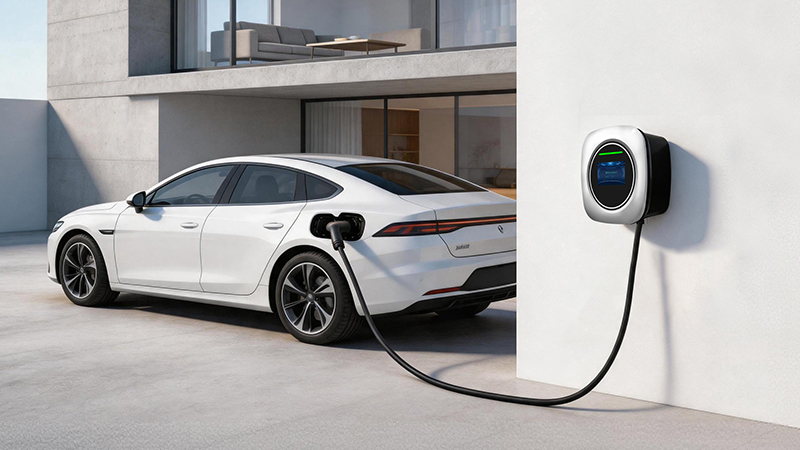
You must choose exactly how power reaches your equipment. The physical installation method directly impacts charging speeds, safety, and daily reliability. You basically have two primary paths: plug-in or hardwired.
Plug-in setups rely on a heavy-duty wall outlet installed in your garage.
Pros: They offer excellent portability. You can easily unhook the unit from the wall if the hardware fails. You can take it to another property if you move.
Cons: These setups restrict you to a 40-amp maximum output due to standard outlet ratings. You must purchase an expensive, industrial-grade receptacle to prevent melting. Cheap builder-grade outlets fail quickly under sustained EV loads. Furthermore, local electrical codes usually mandate a GFCI breaker for garage receptacles. This creates a frustrating redundancy. The charger already has internal safety sensors. The dual system frequently causes nuisance tripping, leaving your car uncharged in the morning.
Hardwired systems connect directly into your main electrical panel through dedicated conduit.
Pros: They are strictly required for maximum charging speeds of 48 amps and above. Hardwiring completely eliminates the need for problematic GFCI breakers. It removes the physical failure point of an industrial receptacle. This method provides vastly superior weather resistance for outdoor mounting applications.
Cons: You must hire a qualified electrician to install, remove, or upgrade the equipment. You cannot easily swap it out yourself if a component breaks.
Current electrical safety trends heavily favor hardwiring. We recommend it as the default standard. It is practically mandatory for permanent, outdoor, or high-amperage installations.
| Installation Type | Max Speed | Weather Resistance | GFCI Issues | Portability |
|---|---|---|---|---|
| Plug-In (NEMA 14-50) | 40 Amps | Moderate (Indoor best) | High Risk (Nuisance Tripping) | High (DIY Swap) |
| Hardwired | 48+ Amps | Excellent (Outdoor safe) | None | Low (Electrician required) |
Once you know your electrical limits, you can evaluate specific hardware features. Keep your focus strictly on practical performance metrics rather than gimmicky aesthetics.
Amperage dictates your exact charging speed. You must align these tiers with your driving habits.
| Amperage Tier | Required Circuit | Estimated Range Added Per Hour | Best Use Case |
|---|---|---|---|
| 32A | 40A | ~25 miles | Smaller panels, overnight charging |
| 40A | 50A | ~30 miles | Standard home installations |
| 48A | 60A | ~36 miles | High-mileage drivers, large batteries |
Many buyers overvalue smartphone app integration. Basic "dumb" models function flawlessly. They charge the vehicle immediately upon connection. Smart models offer Wi-Fi features. Ask yourself if you truly need app notifications or if your car already handles scheduling internally.
The most critical smart feature is Dynamic Load Management (DLM), sometimes called load sharing. DLM monitors your home’s real-time energy use. It automatically slows down the vehicle charge if your home AC or electric oven turns on. This prevents overloading a 100A panel. It allows two chargers to safely share one circuit without tripping breakers. DLM frequently saves homeowners thousands of dollars in unavoidable electrical upgrade costs.
Your hardware must survive its operating environment. We evaluate ratings like NEMA 3R and NEMA 4 closely.
NEMA 3R: Weather resistant. It handles standard rain and snow perfectly for side-of-house mounting.
NEMA 4/4X: Watertight and dustproof. This higher rating is necessary for harsh marine environments or extreme dust exposure.
Cable flexibility in freezing temperatures is another vital check. Cheaper units rely on stiff PVC outer jackets. These cables turn rigid and unmanageable during winter. This stiffness causes premature mechanical failure near the connector handle. Premium units use elastomeric cables that remain pliable well below freezing.
Best Practice: Always check cold-weather reviews before buying a Wallbox EV Charger if you live in northern climates.
Industry standard lengths run between 16 feet and 25 feet. Always opt for the 25-foot cable. It lets you charge vehicles parked in tricky driveway spots without tedious maneuvering. Integrated cable management is equally important. A built-in holster keeps the cord off the ground. This prevents dangerous trip hazards in dark garages. It also protects the connector head from dirt, moisture, and accidental driveway run-overs.
Great hardware fails completely if installed improperly. Proper installation requires certified professionals and strict code adherence.
Do not hire a general handyman for continuous load infrastructure. You need a specialized installer. Look for electricians certified in EV equipment. Networks like Qmerit pre-screen qualified local professionals. They ensure the installer understands NEC requirements specifically for high-amperage continuous loads. Ask your electrician for a detailed scope of work before signing.
Some homeowners skip municipal permits to save time and money. This represents a massive financial risk. Local inspectors verify critical safety standards like wire gauge and torque specs. Bypassing them violates building codes. If a thermal incident occurs and causes a fire, your homeowner's insurance will investigate. Unpermitted electrical work is a primary reason for claim denial. Always pull the required local permits.
Major e-commerce platforms flood the market with ultra-budget options. Many lack proper safety testing. You must demand UL (Underwriters Laboratories) or ETL certification. These recognized marks prove the equipment survived rigorous thermal and electrical stress tests. Uncertified hardware risks your home and your expensive vehicle. A few hundred dollars in savings is never worth a garage fire.
Smart purchasing dramatically lowers your final out-of-pocket expenses. Local and federal programs heavily subsidize these infrastructure upgrades.
Local utility companies actively encourage home charging. They want you off the grid during peak hours. They often subsidize specific ENERGY STAR-certified models. You must check their approved list before buying anything. Purchasing unapproved hardware beforehand frequently forfeits hundreds of dollars in rebates. Always verify local program rules first. Many utilities require proof of purchase and a copy of the finalized municipal permit.
Smart chargers unlock massive daily savings. Many utilities offer Time-of-Use (TOU) rates. Electricity becomes significantly cheaper during off-peak hours. You can use the charger’s scheduling feature to start charging at midnight. It stops automatically at 6 AM. This strategy drastically lowers your cost per kilowatt-hour. Even if your car has scheduling, setting it at the charger level acts as a great failsafe.
You might qualify for federal infrastructure tax credits. IRS Form 8911 helps offset installation labor and hardware costs. Eligibility currently depends heavily on geographic census tracts, favoring rural and non-urban areas. State-level programs sometimes stack directly on top of federal benefits. Always consult a tax professional to maximize these returns and file the correct documentation.
Installing reliable home charging equipment requires careful logistical planning. Following a rigorous process ensures lasting safety. Use this structured purchase workflow:
Complete a professional panel assessment to determine your true load capacity.
Check local utility rebate lists for approved hardware and TOU rate plans.
Select hardware matching your calculated electrical limits and environmental needs.
Execute a fully permitted installation using a certified electrician.
We recommend prioritizing safety certifications above all else. Precise load calculations matter far more than sleek aesthetic designs. A robust multi-year warranty outperforms superficial app features every time. Make data-driven choices to guarantee a seamless, safe charging routine for years to come.
A: Not necessarily. You can avoid panel upgrades by utilizing dynamic load management (DLM) features. DLM throttles the charger’s draw when other household appliances demand power. Alternatively, you can safely install lower-amperage hardware on a smaller dedicated circuit, which still provides plenty of range for overnight charging.
A: Yes, but it requires professional assistance. A licensed electrician must safely disconnect the unit, cap the live wires, and secure the junction box. If you anticipate moving frequently, a plug-in NEMA 14-50 model might offer more convenience, despite its lower maximum charging speed.
A: No. Universal connectors ensure broad cross-compatibility. Most non-Tesla EVs use the standard J1772 connector. Newer models and Teslas utilize the NACS plug. You can easily charge any vehicle on any system by using a widely available, certified adapter if the hardware connector differs.
A: Only under specific conditions. They justify the higher price if your local utility mandates Time-of-Use rates, offers demand-response cash rebates, or if you strictly need dynamic load-sharing capabilities. If your panel easily handles the load and you have flat electricity rates, a basic model suffices.

The adoption of electric vehicles is accelerating in Latin America, with Costa Rica leading the way. The country boasts abundant renewable energy (over 98% clean electricity) and a strong commitment to decarbonization, providing an ideal environment for building electric vehicle charging infrastructure.

Waizida Unlocks New Capabilities with Fully Integrated Circuit Board ManufacturingWaizida has achieved a critical milestone in vertical integration: we now possess complete in-house capability for the research, design, and production of the core printed circuit boards (PCBs) for our EV charging stat

From March 5th to 7th, 2025, the 18th Italy International Renewable Energy Exhibition (KEY Energy 2025) kicked off at Rimini Expo Centre in Italy. As an innovative player in the global new energy charging sector, Waizida showcased its brand-new charging pile series at the exhibition, demonstrating i

Las Vegas, March 22, 2024 — From March 20 to 22, Waizida successfully participated in the 2024 U.S. EV Charging Summit & Expo held in Las Vegas, gaining significant industry attention.As one of the key global platforms for electric vehicle charging technology and infrastructure, the summit attracted


