New Energy, New Idea, New Life

Views: 0 Author: Site Editor Publish Time: 2026-08-31 Origin: Site


Making the leap from a traditional gas car to an electric vehicle often introduces unexpected friction into your daily routine. Drivers frequently face lingering anxiety surrounding charge durations, unpredictable energy costs, and confusing hardware specifications. The baseline reality is stark. Relying on standard 120-volt wall outlets offers only a slow trickle charge, which falls short for regular commutes. Exclusively using public fast chargers is equally problematic, proving highly inefficient and expensive for daily drivers. Effective EV ownership requires a strategic approach to home or workplace charging environments. Upgrading to dedicated hardware bridges the crucial gap between your vehicle’s advanced capabilities and everyday electrical grid realities. By installing a robust Wallbox EV Charger, you gain absolute control over your vehicle's readiness. Read on to understand the math behind charging times, true installation costs, and exactly how to evaluate hardware solutions.
Time: Charging speed is governed by the bottleneck between your vehicle’s onboard charger (OBC) and the external power source.
Cost: Home charging offers the lowest total cost of ownership, provided users leverage off-peak electricity rates and applicable utility rebates.
Hardware: A Level 2 Wallbox EV charger is the standard for safe, overnight home charging, delivering up to 8x the speed of a standard outlet.
Intelligence: Investing in a smart wallbox charger protects against grid overloads and unlocks automated cost-saving features like dynamic load management.
Understanding EV charging times requires a grasp of basic electrical principles. Your vehicle does not absorb power indiscriminately. Instead, charging speed depends entirely on the bottleneck between your external power source and the vehicle’s onboard charger (OBC). If your home delivers 11 kW but your car’s OBC maxes out at 7 kW, you will only receive 7 kW.
You can estimate your session duration using a simple calculation framework. The formula is straightforward: Battery Capacity (kWh) ÷ Charging Power (kW) = Approximate Charging Time. For example, a fully depleted 60 kWh battery connected to a 7 kW output will take roughly 8.5 hours to reach a full charge.
Industry experts define Level 1 as "trickle charging." You simply plug a portable cable into a standard household wall outlet. This method yields roughly 3 to 5 miles of range per hour. It remains viable only for extreme low-mileage drivers or plug-in hybrid owners. A fully electric vehicle could take days to recharge completely on this tier.
This tier stands as the definitive decision-stage solution for modern drivers. It utilizes a 240-volt circuit, similar to an electric dryer or oven. Level 2 yields between 15 and 30+ miles of range per hour, typically operating between 7 kW and 11 kW. This robust power delivery allows for complete, stress-free overnight replenishment.
DC fast charging bypasses the vehicle’s OBC entirely to feed direct current straight to the battery. We must clarify an important distinction here. Level 3 is strictly for en-route travel, pushing batteries from 20% to 80% in about 30 minutes. You should not use it for your daily routine. Frequent fast charging introduces battery degradation risks and carries significantly higher premium costs.
EV Charging Speed Comparison
| Charging Tier | Voltage Level | Typical Power Output | Miles Added Per Hour | Primary Use Case |
|---|---|---|---|---|
| Level 1 | 120V (AC) | 1.4 kW - 1.9 kW | 3 - 5 miles | Emergencies, PHEVs |
| Level 2 | 240V (AC) | 7.0 kW - 11.5 kW | 15 - 30+ miles | Daily home/work charging |
| Level 3 | 400V - 800V (DC) | 50 kW - 350 kW | 100+ miles in 20 mins | Long-distance road trips |
Evaluating the financial side of electric vehicle ownership requires looking beyond the sticker price of the car. The daily economics depend heavily on where and when you plug in. We must carefully contrast the premium rates of public networks against local residential utility rates to understand your actual savings.
Public charging networks like EVgo or Electrify America operate as commercial enterprises. They charge a premium per-kWh rate to cover expensive infrastructure, real estate, and maintenance. Often, public fast charging costs two to three times more per kilowatt-hour than residential electricity. Charging at home flips this dynamic. It locks in lower residential rates, making daily commutes incredibly economical.
Many utility providers offer Time-of-Use rate plans. These plans structure electricity prices based on grid demand. Charging costs plummet when you restrict your sessions to off-peak nighttime hours. By scheduling your car to draw power after midnight, you avoid peak afternoon tariffs. This single habit significantly shrinks your monthly energy bill.
Transitioning to dedicated home hardware requires upfront capital. We need to outline the transparent assumptions of a home setup to avoid unpleasant surprises. Your TCI breaks down into three distinct categories:
Hardware cost: The physical price of the charging unit itself.
Labor and materials: Electrician fees, heavy-gauge copper wiring, conduit runs, and potential trenching for detached garages.
Hidden fees: Municipal permit costs, structural inspections, and potential utility meter upgrades.
The upfront installation cost might seem steep initially, but financial relief exists. Federal tax credits, state incentives, and local utility rebates heavily subsidize the upfront purchase of certified equipment. Some utility companies will even cover the entire hardware cost if you participate in their demand-response programs. Always research local rebates before finalizing your budget.
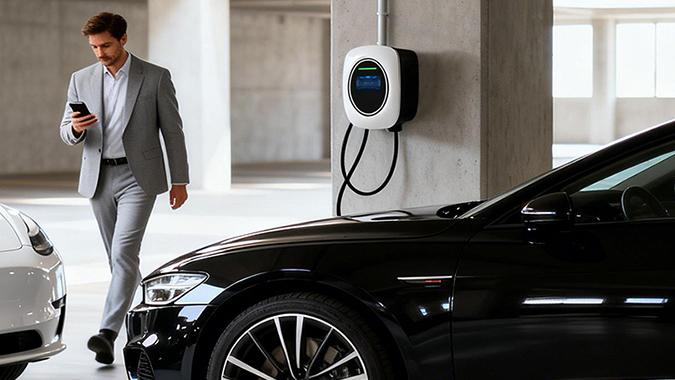
Selecting the right equipment dictates the safety and reliability of your daily charging experience. Moving away from standard mobile cables toward dedicated wall-mounted units is essential. The industry recognizes these dedicated chargers as the gold standard for residential and commercial use.
Safety remains the absolute priority when managing high-voltage electrical equipment. We must explain why wall-mounted, hardwired, or securely plugged 240V units are superior. They are inherently safer for continuous, high-amperage electrical draws compared to portable cables. Electrical codes require continuous loads to run safely for hours. Dedicated wallboxes feature robust internal components designed specifically to manage this intense thermal output without overheating.
A quality unit protects your investment by remaining compatible with various vehicles. You do not need a brand-specific charger. A standard J1772 connector or a NACS (North American Charging Standard) connector on a quality wallbox will charge virtually any EV on the market. This vehicle agnosticism future-proofs your installation. If you switch from a Ford to a Tesla, or vice versa, a simple adapter is all you need to maintain functionality.
Hardware placement dictates specific manufacturing requirements. We must emphasize the importance of NEMA or IP weather ratings for outdoor installations. A NEMA 4 enclosure ensures your charger survives heavy rain, snow, and dust. Furthermore, UL or CE safety certifications are non-negotiable. These independent testing marks satisfy rigorous insurance policies and strict municipal building code requirements.
The market divides into "dumb" chargers that simply supply power and "smart" chargers connected to the internet. While basic units work fine, intelligent hardware transforms your energy management. We should shift our focus from simple features to tangible, real-world outcomes.
Integrating a Smart wallbox charger into your home network changes how you interact with your vehicle. App connectivity is not just a digital gimmick. It allows users to monitor real-time energy consumption directly from their smartphones. You can easily track your exact charging expenses, export monthly data for business reimbursements, and diagnose potential connection faults remotely.
This specific technology represents a critical feature for older homes with limited electrical capacity. Dynamic load balancing automatically adjusts your charging speed based on the home’s real-time electricity usage. If you turn on your electric oven and dryer simultaneously, the charger intelligently reduces its power output. This prevents main breaker trips and protects your electrical panel. More importantly, it often saves you from needing a highly expensive utility service upgrade.
Intelligent scheduling features take the guesswork out of TOU rate optimization. Smart units automatically align charging sessions with your utility’s lowest tariff windows. You simply plug the car in when you arrive home at 6 PM. The charger will hold the session in a paused state, waking up exactly at midnight when electricity prices drop.
For homes equipped with rooftop solar panels, advanced chargers offer an incredible synergy. Modern smart systems can communicate with your solar inverter. They allow the EV to charge exclusively from surplus solar generation rather than drawing grid power. This eco-charging capability essentially lets you drive on pure, self-generated sunshine.
Purchasing the hardware is only the first phase of your journey. Safe and legal implementation requires professional oversight and adherence to local regulations. Attempting to bypass proper installation protocols exposes your property to severe fire risks and liability issues.
Before making any hardware decisions, you must face the reality of your current infrastructure. Many older homes still operate on 100-amp electrical panels. These panels often lack the spare capacity required for a new 40A to 60A dedicated EV circuit. A licensed professional must perform a load calculation. They will determine if you have the necessary amperage overhead or if you require load-management hardware.
Drivers must evaluate the specific trade-offs between hardwired and plug-in configurations. Hardwiring the unit directly into your electrical system offers distinct advantages. It allows for higher maximum speeds, supporting up to 48 amps. It also provides much cleaner outdoor weatherproofing. Conversely, a NEMA 14-50 plug-in setup offers easier hardware replacement if a unit fails. However, modern electrical codes require a GFCI breaker for 240V outlets. Since chargers have internal ground fault protection, this double-GFCI setup frequently causes frustrating nuisance tripping.
We cannot overstate the dangers of DIY electrical work. You are dealing with continuous high-voltage loads capable of melting substandard components. We strongly warn against amateur installations. Emphasize the absolute necessity of hiring licensed, EV-certified electricians. They know how to properly size the wire, pull the required municipal permits, and schedule local inspections. This professional route ensures your hardware warranty remains valid and your home insurance stays fully compliant.
Navigating the crowded marketplace feels overwhelming without a structured approach. Use this clear decision framework to streamline your purchasing process and guarantee a successful installation.
Step 1: Audit Daily Mileage. Match your typical daily commute needs against the required kW output. A driver with a 30-mile round trip requires a far less aggressive setup than a super-commuter tackling 100 miles daily.
Step 2: Check Electrical Capacity. Hire an experienced electrician to perform a formal load calculation before you buy any hardware. Knowing your home's physical constraints narrows down your options immediately.
Step 3: Verify Utility Incentives. Cross-reference your local power company’s website. Many utility providers mandate specific "Smart" charger models to qualify for financial rebates or specialized EV rate plans.
Step 4: Future-Proofing. Decide if transforming into a two-car EV household is in your five-year plan. If so, this easily justifies purchasing a smart charger equipped with dual-port power-sharing capabilities right now.
Transitioning to electric mobility requires adjusting your fueling habits from weekly gas station visits to daily home replenishment. Our summary verdict is clear. While public fast charging effectively solves occasional road trip logistics, a reliable Level 2 hardware setup serves as the true financial and logistical backbone of EV ownership. It provides safety, convenience, and crucial energy management. For your next-step action, we strongly prompt you to schedule a home electrical assessment. Check your local utility provider for their approved hardware lists before making a final purchase to maximize your long-term benefits.
A: Yes, you can safely install most units outdoors. However, you must verify that the specific model carries a NEMA 4 or NEMA 4X enclosure rating. These standardized ratings guarantee excellent weather resistance against heavy rain, snow, and blowing dust.
A: Not always. If your home has a smaller 100-amp panel, advanced load-balancing software can solve the problem. This technology monitors your home's total power draw in real-time. It automatically lowers the vehicle's charging speed when other large appliances turn on, successfully mitigating the need for expensive panel upgrades.
A: Yes. Level 2 chargers are fundamentally universally compatible. They feature standard connectors like the J1772 or NACS plug. If you purchase a vehicle with a different charge port later, easily accessible and inexpensive adapters will bridge the connection seamlessly.
A: Your exact cost depends on your local electricity rates.

The adoption of electric vehicles is accelerating in Latin America, with Costa Rica leading the way. The country boasts abundant renewable energy (over 98% clean electricity) and a strong commitment to decarbonization, providing an ideal environment for building electric vehicle charging infrastructure.

Waizida Unlocks New Capabilities with Fully Integrated Circuit Board ManufacturingWaizida has achieved a critical milestone in vertical integration: we now possess complete in-house capability for the research, design, and production of the core printed circuit boards (PCBs) for our EV charging stat

From March 5th to 7th, 2025, the 18th Italy International Renewable Energy Exhibition (KEY Energy 2025) kicked off at Rimini Expo Centre in Italy. As an innovative player in the global new energy charging sector, Waizida showcased its brand-new charging pile series at the exhibition, demonstrating i

Las Vegas, March 22, 2024 — From March 20 to 22, Waizida successfully participated in the 2024 U.S. EV Charging Summit & Expo held in Las Vegas, gaining significant industry attention.As one of the key global platforms for electric vehicle charging technology and infrastructure, the summit attracted


